
Veteran Stories
Witnesses to History: What Wartime Correspondence Tells Us About French Canadian Society During the Second World War
What Wartime Correspondence Tells Us About French Canadian Society During the Second World War
Based on the Letters of Private Henri Grenier, Régiment de Maisonneuve – 1939–1943
Wartime correspondences are primary sources of inestimable value, not only because they offer a window into the daily lives of men deployed in theatres of operation, but also because they bear witness to the social context of 1930s–1940s Quebec.
A resident of Pointe St-Charles, a working-class neighbourhood of Montreal, Henri Grenier voluntarily enlisted in 1939 at the age of 40 with the Régiment de Maisonneuve, to be deployed to Europe. He married Aurore on May 11th, 1940, just before leaving for training. He departed Canada on August 27th, 1940 from the port of Halifax with Company B, and was transferred to Company D on January 24th, 1941. His correspondence with his wife spans from May 27th, 1940, upon his arrival at the Valcartier base camp, to February 1st, 1943, when he was stationed in Bognor, England.
A chronological reading of Private Grenier’s personal letters reveals significant themes of the wartime period among the French-Canadian working class in Quebec at the time.
These themes offer a better understanding of the socio-economic context of the 1930s, the value that deployed men placed on their family unit, and the daily realities of wives living with the absence of a loved one. The role of religion in civil society and the military, homesickness and longing, the experience of the holiday season in wartime, and conjugal love are also themes that emerge from this correspondence.
Literacy and Letter Writing
For men away from home, the difficulty of exchanging news with loved ones was compounded when their level of literacy created obstacles. It was quite common for soldiers to seek help from comrades to write their letters.
In Private Grenier’s case, his Quartermaster Sergeant wrote on his behalf. In a letter dated June 1, 1941, it is noted: “signed, my war corporal.” On November 27, 1942, he begins his letter as follows:
(…) you’ll excuse my delay in responding as the young man who was writing was gone on a 9-day leave and is now back.
After analyzing the letters, it is possible to identify several variations, indicating that Henri had recourse to different individuals to write his letters to his wife. Some letters are arduous to read due to phonetic spelling and an absence of punctuation, while others are written in an agile hand with perfect spelling. However, the consistently similar tone and content suggest he dictated them each time to his scribe.
Financial Prudence and Post-Economic Depression Angst
In nearly every letter from Private Grenier reflects the post-Depression economic context and the financial uncertainty linked to the war. He urges his wife to be careful with money, to keep her papers in order, and not to waste. It is a time of vigilance, where caution prevails because no one knows what tomorrow holds.
(…) I think we’ll be getting on the boat real soon. Don’t be worried, Aurore, look after all your daily tasks, do like you was with me. (July 19th, 1940)
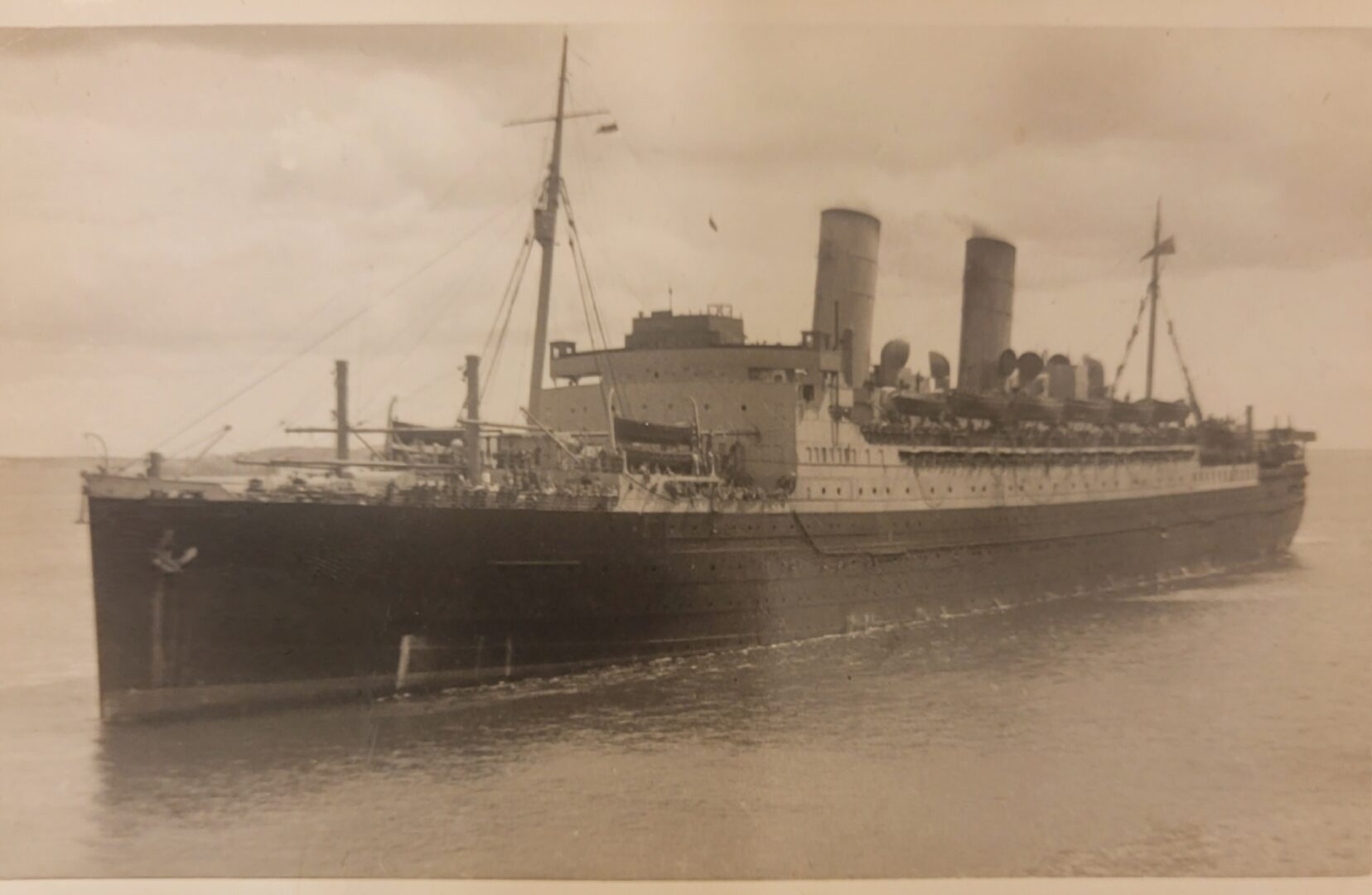
The HMS Oronsay departed from the port of Halifax on August 27th, 1940, carrying the men of the 1st Battalion of the Régiment de Maisonneuve. It arrived at Gourock, Scotland, on September 4th, 1940.
(…) if I’m late writing to you it’s ’cause we don’t know when we’re leaving. It’s a matter of hours or days. Take courage Aurore, stay faithful, me I’m gonna save my money, do like me Aurore. (July 19, 1940)
Save your money ’cause me I’m only takin’ 5 dollars a week and now I’m gonna have my bar for one year of military service, that shows you I’m taking care of myself and on your end, take care (…) it’ll put water in our mill. (January 1st, 1941)
Henri asks his wife to send him money little by little for cigarettes and shaving items. He also asks her to send goods that are scarce or expensive in England. The frugal way of life, financial uncertainty tied to global political instability, and years of economic crisis are all reflected in the couple’s exchanges.
(…) you told me you sent me (tobacco) I’ll be very glad ’cause here it’s 5£ for English tobacco, I can’t pay that price. (October 27th, 1940)
(…) dear wife I’m telling you to save the money like I do myself. Give yourself what you need and put away everything you can ’cause after this war there’s gonna be a big famine and if we don’t save my darling we’ll surely regret it. (…) I know you’re careful but you know like me money is real hard to earn where I am (…) the war isn’t over and everything is scarce, I can barely even shave, steel is very rare and we don’t have razor blades. Would you send me some blue Gillette razor blades? (June 1941)
Family Ties and the Network of Belonging
For Henri, far from home, the family network is essential because it allows him to maintain an emotional connection with his life before the war. Family seems to be at the heart of his thoughts. His loved ones are the anchor that consolidates his stability in his overseas life where his reference points are in continual upheaval. Thinking about home, everyday routines, and the individuals who form his emotional circle can bring as much comfort as nostalgia.
Private Grenier regularly asks for news of those around him. Keeping up with the lives of loved ones who stayed in Montreal is a source of happiness for many soldiers, and knowing that his wife is surrounded by supportive people brings him a sense of security.
(…) if during my absence there’s a change at home, take the big room at your sister’s and fix it up to your liking. (September 18th, 1940)
(…) in your next letter give me news of all of ours and tell papa to prepare a big Black Horse for a poor Maisonneuve. (1941)
(…) you’ll give my regards to grandpa and my grandma for me and it makes me very sad not to have spent the holidays with you all. (January 9th, 1941)
(…) you’re telling me my aunt has died, I send all my sympathies to the whole family. For me, it pains me to hear such news, I would have liked to attend the service with you all. (April 5th, 1942)
(…) in your next letter would you talk to me about the whole family and a little about Montreal? I miss everyone a lot. And tell me, which regiment is L. enrolled in? (July 21st, 1942)
News does not always arrive regularly in England. Henri waits with impatience for his letters. The connection with loved ones is a powerful motivating factor that helps him better accept the uncertainty of the war’s duration.
A Devoted Husband
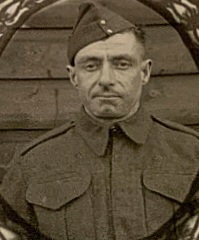
Henri Grenier, 1st Battallion, Régiment de Maisonneuve
Despite the distance, Henri’s sense of duty to protect his wife is ever-present in his letters. He is attentive to Aurore in each letter, offering advice and expressions of care.
(…) you were telling me your tooth hurt. Get it pulled, Aurore (…) go to Dr. Bélanger and give me some news. (July 1940)
(…) you’ll tell me if you bought a warm coat, I want you to get yourself a warm one. (January 1941)
(…) you tell me you’re sick and you have money in hand. (…) Get yourself properly treated ’cause the only happiness is to be in good health. I would love to be by your side to tenderly embrace you. (February 1941)
This attentiveness certainly expresses longing and perhaps a sense of helplessness. Indeed, the gap in realities is vast: the soldier is in a state of constant waiting for news from home or for a parcel, which constitute so many temporary joys, while Aurore bears the full weight of daily life in Montreal.
The mental load of managing errands within the limits imposed by rationing, household chores (sometimes while also holding employment) in a context of constant anguish creates a certain gulf between the monotony of the soldier’s life in England and the overloaded daily routine of his wife at home. This distinction is evident in the discourse of both Henri and Aurore. He repeats that time drags and that she is his only comfort:
(…) I find the time very long and boring, I’d love to be in Montreal. (October 16th, 1940)
(…) I’m very worried about you and I miss our dear Canada and you my darling so much. You’ll give me all the news, don’t be shy, tell me everything but if things are going fine in Montreal (…) and always be faithful to me my darling ’cause you know, I love you more than ever (…) in the war it ain’t fun. (October 16th, 1940)
(…) it’s real boring here, we go to bed at 8:00 in the evening and we get up in the night. (October 27th, 1940)
(…) the last letter you sent me (…) took 20 days. Have you received the 17 letters I wrote to you? (…) Write to me 2 times a week ’cause (letters) delay and sometimes get lost. (December 10th, 1941)
Declarations of Love
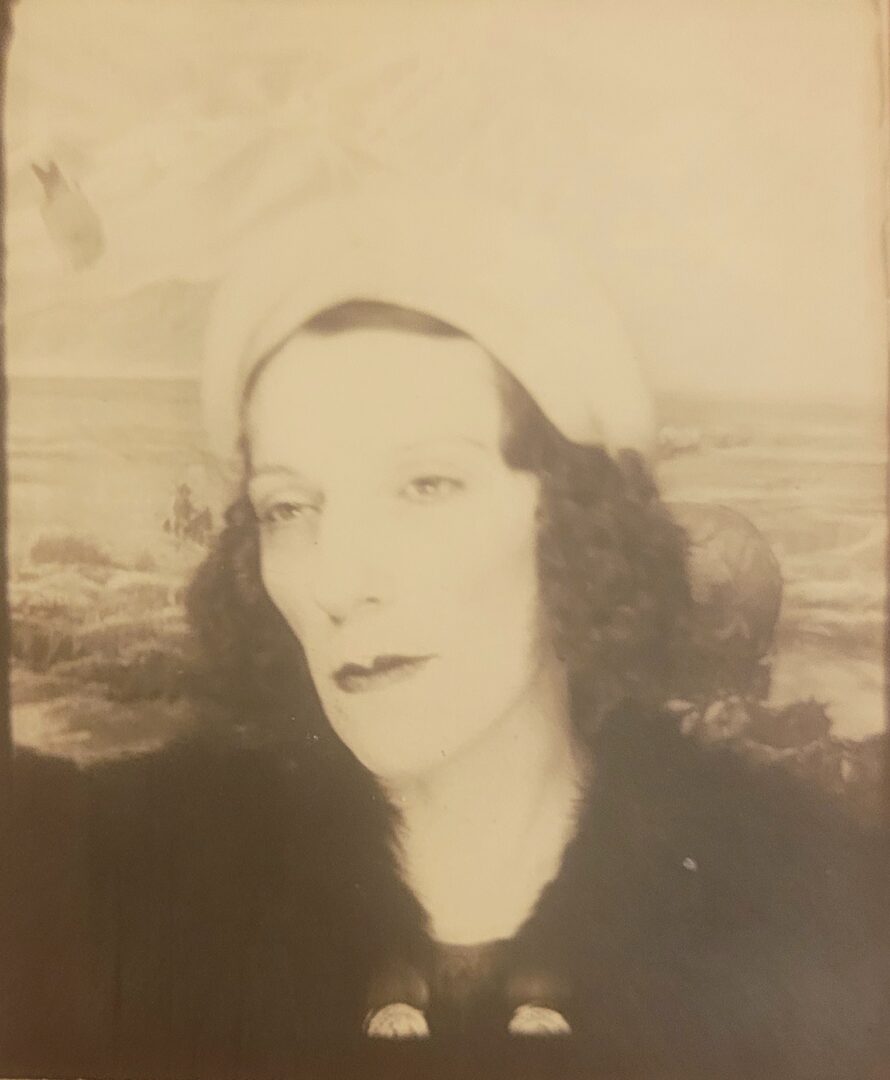
Juliette Aurore Dumais, Henri Grenier’s wife
What stands out above all in Henri’s letters is the depth of love he feels for his wife.
Two hearts that love each other will never be forgotten. When I return, I’ll love you even more. (October 16th, 1940)
(…) I only have one small sickness, it’s to go find you again my little darling (…) it’s been long enough that we’ve been separated, if the good Lord wills it we’ll be together very soon.
(…) your husband who always thinks of you and I can’t wait to be together to have a rest. It’s been 2 years that I’ve been playing the horse and I can’t wait to rest a little. From your husband Henri, big golden kisses. (undated)
(…) I’m finishing my letter ’cause it’s very dark ’cause we’re in the woods. I embrace you hard my treasure that I love so much from the bottom of my heart. Don’t delay in writing to me ’cause it’s the only comfort for me my treasure. From your husband who always thinks of you until the hour of my death. All these kisses, they’re for you my treasure. (undated)
I received (your portrait) and I look at it often and I would much rather have you so I could hold you in my arms but that day will come sooner than you think. (…) I find I must leave you but with regret, (…) always hoping to receive lots of news from you as soon as possible ’cause I’m always eager to hear from you. I remain always your husband who thinks of you and embraces you with all his strength. (undated)
Dear wife you’re telling me you’ll send me your portrait dressed in your coat and your hat, I can’t wait to see you in your new outfit my treasure. Even though I’m far from you, I love that you look your best (…) I’ve always loved you to be nicely dressed. (April 28th, 1941)
Henri embellishes his passionate declarations with drawings — multiple hearts, for instance. On some letters, every available space on the page is used for words of love.
These declarations reassure his companion of the constancy of his feelings for her, and keep the bond alive in his absence. Aurore is more reserved in her own declarations, using her letters to recount her daily life. Perhaps out of simple modesty, or because she followed guidelines that advised families to write in a positive tone in their correspondence in order to preserve troop morale?
(…) I miss you too, I’m also faithful to you. (June 7th, 1940)
(…) dear husband, I’m fine, don’t worry, but it’s boring, the weather isn’t nice and it rains every day in Montreal. I miss you a lot, I received your letter. (June 13th, 1940)
(It) always gives me great pleasure to receive (a letter) ’cause I’m very worried about you and when I receive a letter from you it brings me back to myself. (September 21st, 1940)
(My sister) gave birth to a son. (…) Me I’m working day and night these days I raised my sister and the children are all sick, one after the other. (…) work has spread around, almost everyone is working. (…) apart from that everything is expensive for food, clothes even with the ration for tea, coffee, sugar. Later it’ll be other things that will be rationed. I’m in good health, don’t worry about me and I’ll send you your cigarettes. (September 21st, 1940)
did you know that T. remarried with Madame C. and there’s a baby, a little boy (…) we’re working for the homeland. (February 3rd, 1942)
(…) I’m not moving this year so if you arrive next year I’ll wait for you to arrive before moving, I can’t wait for you to get here, I would have loved for you to have been with us for the holidays. (December 21st, 1942)
Plans for the Future
The separation caused by the war seems to generate hope and dreams of a better future in Private Grenier’s letters. Plans and promises play an essential role in maintaining the morale of individuals awaiting a return to normal life. The hope of such a return generates a semblance of stability within a reality whose outcome remains uncertain.
(…) I looked at my baptismal certificate and I just realized I’ve just turned 42 years old — if God allows it, in a short while we’ll be together again and this time, it will be to never leave you again. (October 1st, 1941)
(…) as there will no doubt soon be as usual an epidemic of moving, I will ask you to protect yourself against the scourge and wait to do so until I am there, and to reward you for such perseverance we will choose together the most charming apartment in the city and we will relive our honeymoon in its final quarter. (January 1st, 1943)
The Place of Religion
The Catholic religion, omnipresent in French Canadian culture of the 1930s–1940s, occupies an important place in the reality of military personnel in the field as much as for civilians at home. In these moments of anxiety, committing one’s fate to a higher power seems to bring Henri a certain sense of peace and to fill a need for comfort.
Each Canadian regiment is provided with a chaplain who offers guidance, moral support, and religious rites to the men of the unit. Padre Guy Laramée accompanied the Régiment de Maisonneuve during its years of training in England (1940–1944).
These days we hear mass outdoors, I pray to the good Lord and think of you during these precious moments, that God bless you and keep you. (undated)
(…) I went to confession last evening and this morning to communion so that I’d be well prepared for the journey we’re going to undertake these days. We still don’t know where we’re going but as soon as I have news I’ll send you the address. (…) you’ll have a candle lit to the holy virgin for me so that she protects me everywhere and that I come back to you safe and sound. (August 21st, 1940)
(…) I’m eager to tell you I’ll go to confession tonight, and have no fear, I’ll make my Easter duties and I hope you will too, and pray that no misfortune will befall me, that I keep my health. (February 24th, 1941)
Nostalgia: Food, Customs, and Quebec Traditions
The habits, customs, food, and clothing of one’s homeland take on a special significance for soldiers far from home. These reminders of daily life at home are a balm that soothes Henri’s nostalgia, yet also seem to intensify it. During the war, memories of Quebec’s culinary and cultural traditions are precious:
(…) send me a box (of chocolate cookies) (…) a packet of black tea ’cause in England we can’t go out ’cause it’s very dark and at 9:00 they kill the lights and you have to go to bed. With cookies and some good Canadian tea, it passes the time and we taste something from our country. (January 9th, 1941)
(…) if the good Lord wills it, come New Year’s we’ll eat some good fresh pork and also some good tourtières the good old-fashioned way ’cause since I’ve been in the army, I haven’t eaten any of that. (February 24th, 1941)
We celebrated St. Jean-Baptiste. It’s the first time people have seen Canadian holidays celebrated in England by all the Canadian soldiers of the 2nd Division. You’ll listen to it well on the radio ’cause we sang for nearly an hour on the radio, all kinds of songs and especially the good old favourite song of the regiment, and on top of that, we got photographed for the newsreels. (June 6th, 1941)
I thank you for everything you sent me, I’m very proud, as soon as it arrived I opened a can of beans, the only thing missing was you to cook it for me. I put on my bodysuit and my new shirt, I thought I was back in Canada. (July 28th, 1941)
The Sadness of the Holiday Season
The hardest and saddest period for many during the war remains the year-end holiday season. Each new one brings the hope of being able to celebrate the next with loved ones, and memories of past holidays occupy an important place in the soldiers’ thoughts.
(The tobacco package) I received it just on the eve of midnight mass, it made me happy (…) I was saving it for Christmas, it was like a Christmas gift from you. (December 25th, 1940)
Dear wife, on this sad day of the year (I write to you) to tell you that I’m alright but I miss you terribly and find the holiday very sad. (January 1st, 1941)
(…) I received your Christmas card which gives me much pleasure, and the portrait on the Christmas card reminds me of the day of our marriage because it resembles you quite a bit. (January 1941)
I hope you had a fine holiday, apart from me who spent it very sadly thinking of all of you. (January 1941)
Historical Empathy
More than 80 years after the end of the Second World War, reading these letters allows us to access the intimacy of the correspondents and to become privileged witnesses of their lives. Analyzing the letters of Henri and Aurore Grenier allows us, as contemporary readers, to better understand the weight of their daily existence, to anticipate the subjects they were going to raise, and to awaken our curiosity about the members of their family.
Through this correspondence, today’s reader can experience moments of happiness and sadness that emerge from their letters. It is also notable that in Henri’s letters, humour co-exists with boredom and worry.
(…) you’re telling me ‘don’t go out with the little English girls.’ Here in England, my sweetheart is my rifle. (December 25th, 1940)
(…) Aurore, I weigh 220 pounds now! What do you think of old Henri, Aurore? Think he’ll be good for cooking this fall? (July 28th, 1941)
He also retains the capacity to marvel at the beauty of the world, despite the precarious conditions in which he finds himself:
Here the winter is far less harsh than at home. Sometimes there is fog. Besides that, there’s no snow and we’ve had only a few frosts so far. There are still roses in some gardens. We are by the seaside and when the wind blows a little, the waves crash over the ramparts. It is magnificent. (January 12th, 1943)
The Last Letter
After three years of regular correspondence, the letter Aurore receives on February 3, 1942 is similar to the dozens of others she has already received. It ends with the following words:
I’m managing here always well enough and I hope that God willing we will see each other again soon. Goodbye (…) your husband who loves you and embraces you.
It is the last letter Aurore will ever receive from her husband.
On February 6th, 1943, a telegram is addressed to her:
We deeply regret to inform you Private Henri Grenier officially reported deceased February 5, 1943 – skull fracture suffered aerial raid STOP Further details will follow upon receipt.
On February 5th, a surprise attack on the town of Bognor by German bombers caused considerable damage. A bomb fell close to the house occupied by Platoon 4, which included Henri Grenier. He was wounded in the head by flying debris and transported to hospital. He died a few hours later.(1)
Henri Grenier was the first soldier of the Régiment de Maisonneuve to die during the Second World War through enemy action.
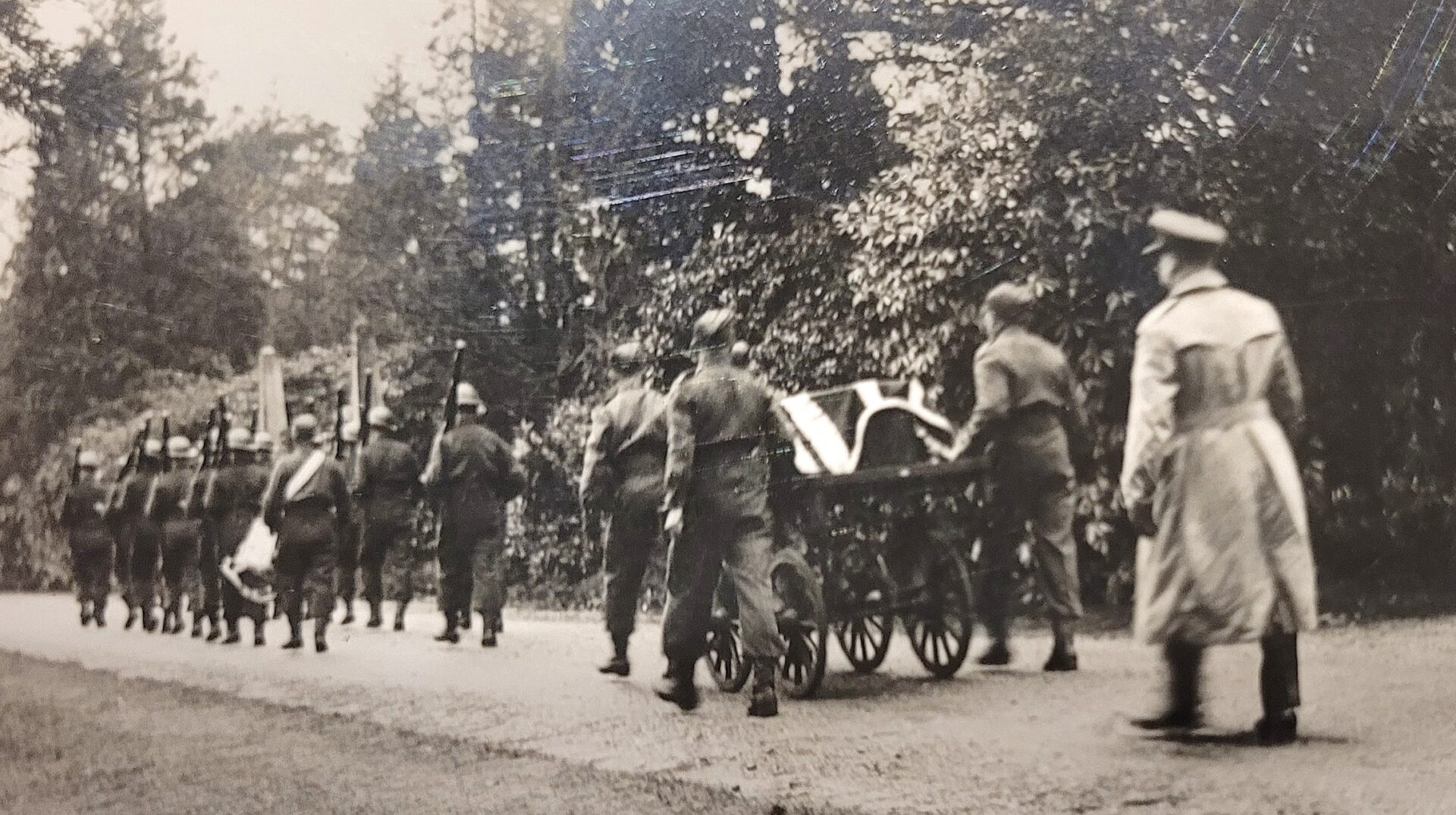
Funeral procession for Henri Grenier, February 9th, 1943, heading to Brookwood Cemetery in England.
Conclusion
Analyzing the letters of Henri and Aurore Grenier humanizes a historical period that might otherwise seem distant and abstract. Thanks to these letters, Private Grenier and his wife become more than a regimental number or a soldier’s wife. Aurore and Henri shared a life, a family, and a daily existence, and becoming aware of this allows the reader to develop empathy for strangers who belong to the past.
The subject of historical empathy, “a process that seeks to understand the thoughts, worldviews, feelings, experiences, decisions, and actions of people from the past in specific historical contexts”(2), is used in pedagogy to shift attention away from global statistics or facts and dates in order to evoke a sense of humanity and increase awareness of the human experience of historical events. This way of doing history, juxtaposed with generic historical facts, allows for an understanding of history at both the emotional and the factual level.
Aurore never moved into a charming apartment with Henri after the war. The correspondence between the husband and his wife, which she kept for the rest of her life, bears witness not only to the reality of this couple but also to the daily lives of the soldiers of the Régiment de Maisonneuve during the Second World War, and to the social realities of an entire generation of French Canadians who contributed to the Allied victory during the Second World War and whose lives were transformed by the conflict.
Editorial Notes
Written by 2Lt (Ret.) Catherine Bourdon-Gill, M.A. History (Thesis in progress)
Archivist | Archives of the Régiment de Maisonneuve
In order to make the text more fluid, certain spelling mistakes have been corrected and punctuation adjusted. The names of family members have also been removed. Extracts from the letters have been translated from colloquial French-Canadian language as faithfully as possible to preserve their original voice and tone.
The wartime correspondence of Private Henri Grenier and his wife, Juliette Aurore Grenier, was donated to the Archives of the Régiment de Maisonneuve by the family.
The author would like to thank her colleague from the Archives of the Régiment de Maisonneuve, LCol (Ret.) Léo Benoît, as well as Marie-Ève Vaillancourt of the Juno Beach Centre, for their great generosity and invaluable assistance in reviewing this article.
A series of short articles drawn from this piece will be published on Le Québec et les guerres mondiales website as well.
Footnotes
- War diary of the Régiment de Maisonneuve, February 5, 1943
- Carla L. Peck, “Historical Empathy – The Most Important Concept in Learning Historical Thinking,” 2012, published online October 29, 2021. Historical Empathy – The Most Important Concept in Learning Historical Thinking – Canada’s History
See more


Donate
to the JBC
As a primarily privately-funded museum, it’s our donors who have made the dream of the Juno Beach Centre a reality.
Learn more about the unique initiatives you can help fund or make a gift to our general fund today to honour the legacy of Canada’s Veterans and ensure their story continues to be told.







