
Dispatches
Concordia Project
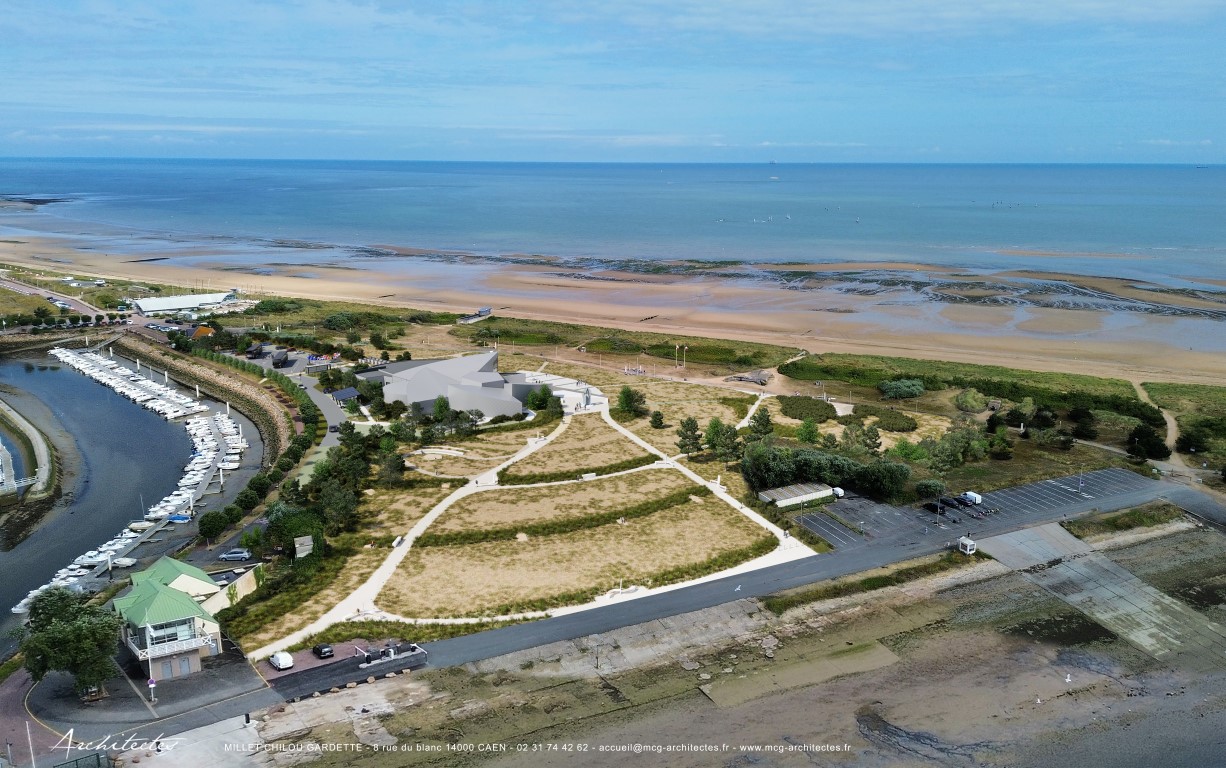
The Centre Juno Beach announces the launch of Concordia, a project that brings together remembrance and more responsible tourism by combining two major initiatives: the extension of the Canadian signature building and the development of a new memorial park, designed as an extension of and in the spirit of the existing Juno Park.
On the former industrial site next to the museum, the Concordia project aims to create a landscaped memorial trail combining ecological restoration with the shared history of Canadians and the residents of Courseulles-sur-Mer. This future restored and interpreted landscape will offer a walk through the site, with seven thematic stations exploring the different memories connected to the area:
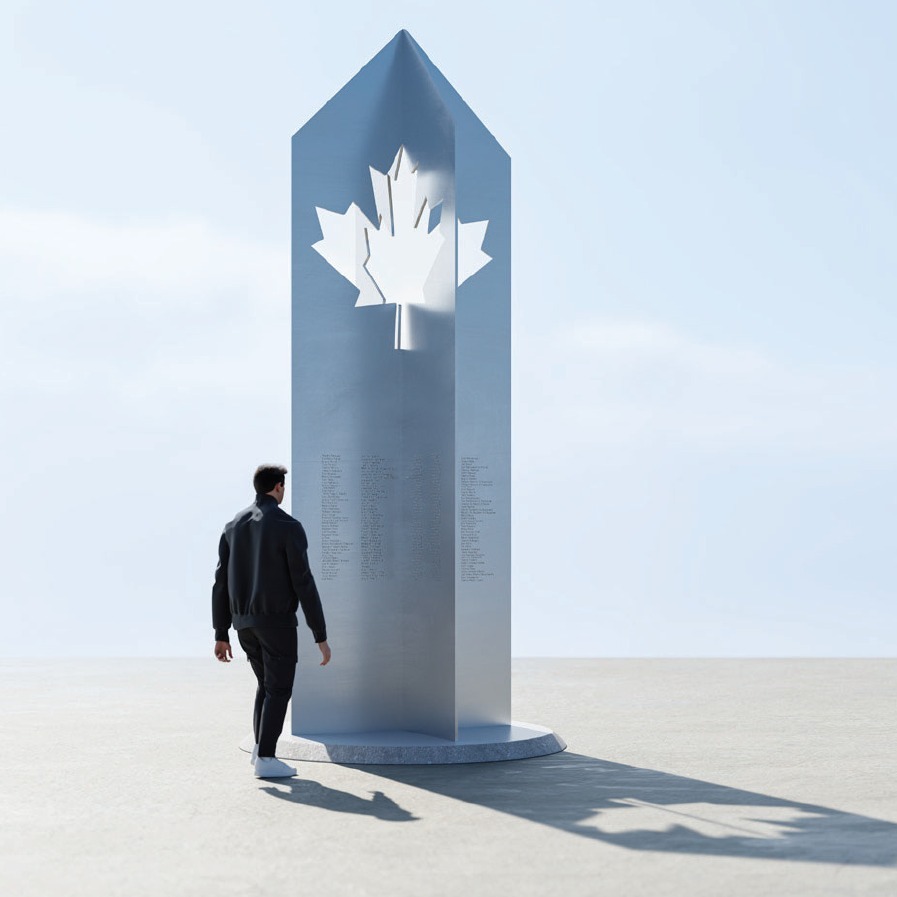
- Canadian remembrance, including a unique memorial dedicated to the 381 Canadians who fell on 6 June 1944.
- Local civilian remembrance, connected to the history of the site, the harbour and its residents.
- Designed by Vert Latitude landscape architects and scenographer Michel Cousin, who was also behind the Centre Juno Beach and Juno Park, this space will symbolise the meeting between Canadians and Normans, while respecting both remembrance and biodiversity.
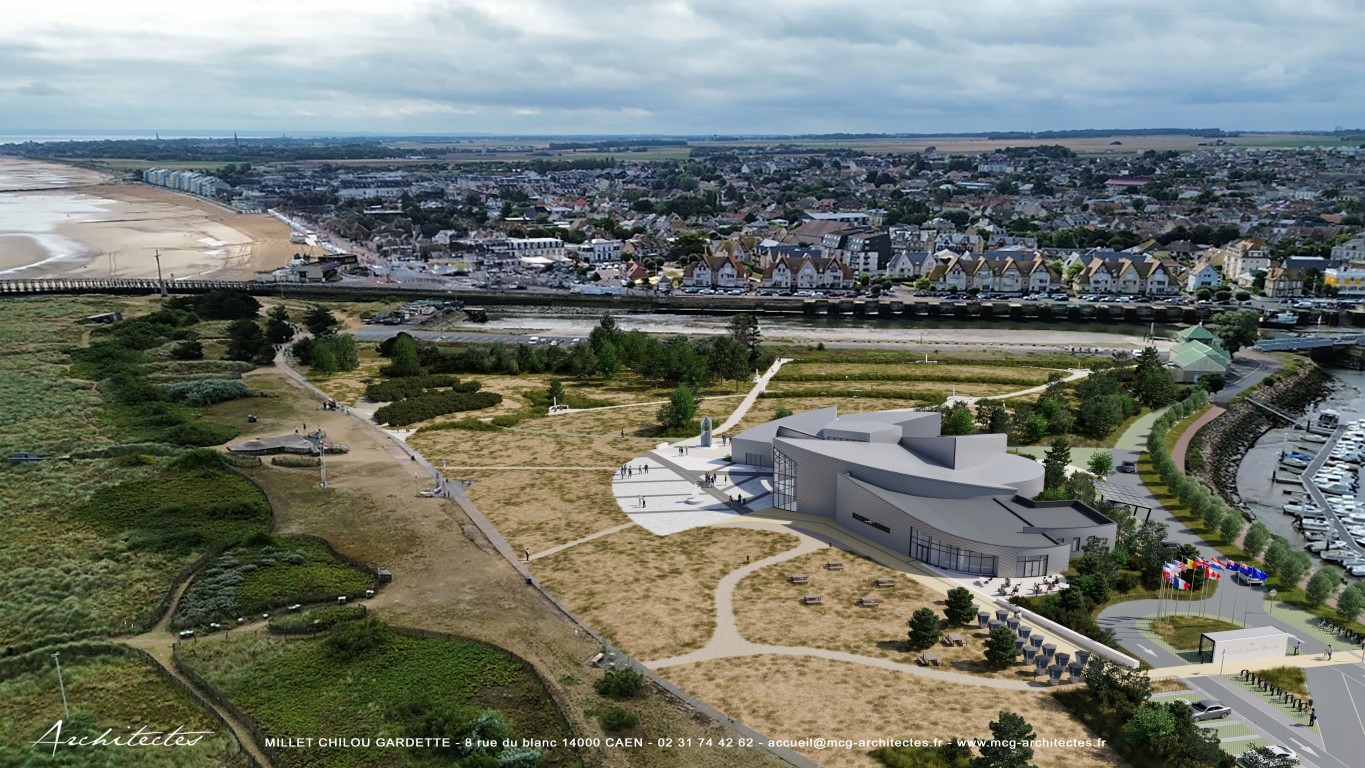
The extension on the west façade of the museum will provide space for an environmentally responsible café/coffee shop and a larger museum shop, further enhancing the visitor experience. Since opening in 2003, the Centre Juno Beach has become a leading destination for remembrance tourism. With visitor numbers continuing to grow (110,000 visitors in 2025), the museum is planning a 450 m² extension with two main objectives:
- Modernise and expand the museum shop, from 45 to 77 m².
- Create an environmentally responsible café/coffee shop, covering 148 m².
Designed by Canadian architect Brian Chamberlain, who also designed the original building, the extension will be overseen by NIU (Colombelles). It will integrate harmoniously with the existing site, with the aim of achieving the E+/C- environmental standard to limit its carbon impact. Accessible independently from the museum visit, the new space will also strengthen the museum’s connection with the local community.
A project driven by a shared, sustainable vision
This development reflects the Centre Juno Beach’s commitment to sustainable visitor facilities that respect the environment and respond more closely to the expectations of its audiences.
With a total budget of €5.56 million excluding tax, this overall project is fully aligned with the Centre Juno Beach’s CSR strategy, which for several years has sought to connect history, education and ecological transition. Funding is provided by partners in France (the European Union, the Normandy Region and the Ministry of the Armed Forces) and in Canada (provinces, foundations and veterans).
The project is scheduled for completion in time for the 84th anniversary of D-Day in 2028.
More information
See more


Donate
to the JBC
As a primarily privately-funded museum, it’s our donors who have made the dream of the Juno Beach Centre a reality.
Learn more about the unique initiatives you can help fund or make a gift to our general fund today to honour the legacy of Canada’s Veterans and ensure their story continues to be told.