Cycle Tourism
Promoting eco-mobility around the museum and welcoming cyclists are priorities at the Juno Beach Centre.
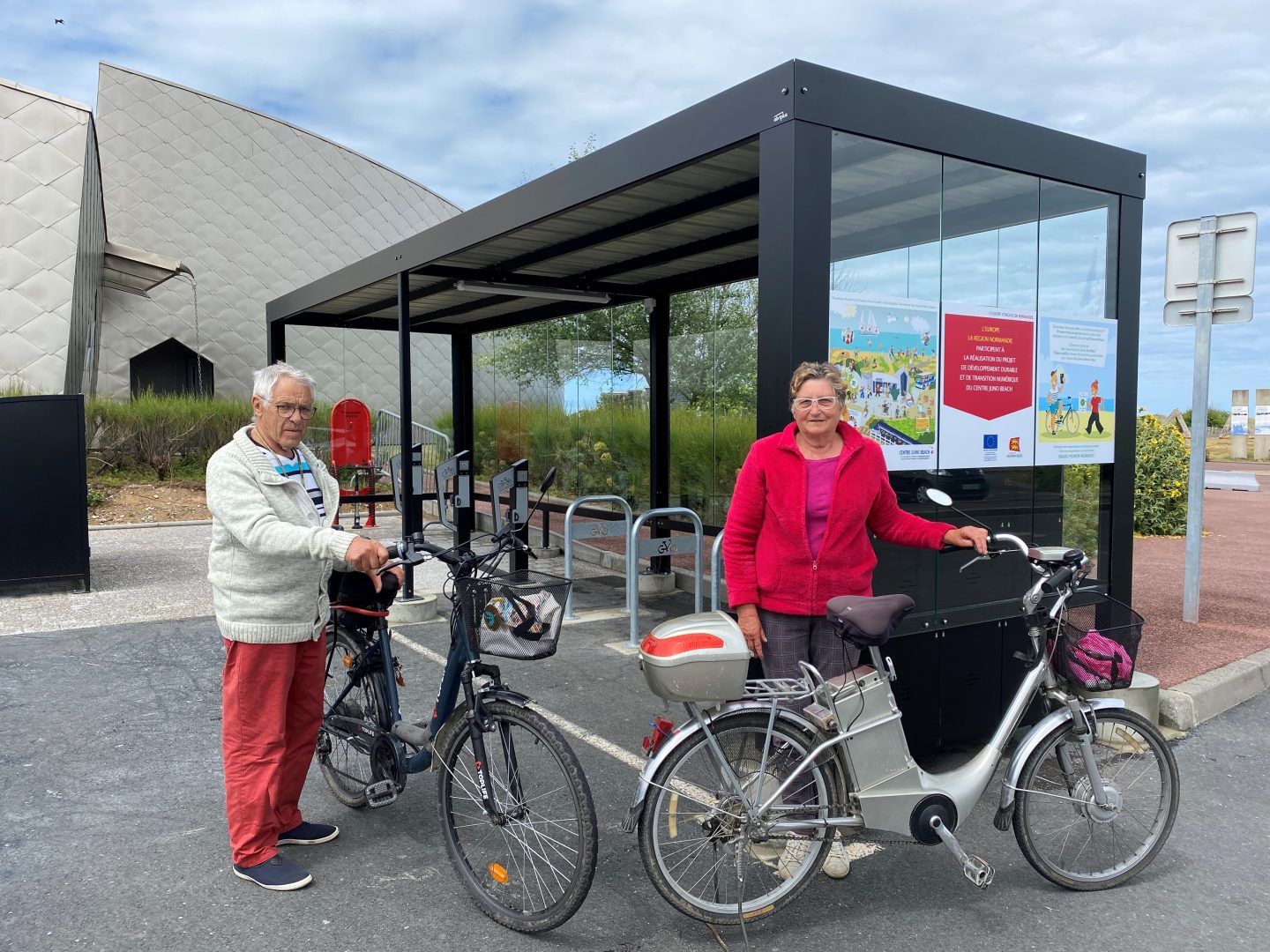
Equipment available on site *
- Bike rack with a capacity of 16 spots
- 6 spaces to recharge electric bikes
- 2 spaces for cargo bikes
- 2 bike boxes
- Lockers
- Bike repair station
*Some projects benefit from the European Regional Development Fund (ERDF) as part of the “Aid for the Ecological and Digital Transition of Tourism” in compensation for the impact of the Covid-19 pandemic on the tourism sector.
The Juno Beach Center is labelled Bike Friendly. This label is nationally recognized and guarantees a warm welcome and quality service along the cycling routes.
Services and materials offered on site
- A warm welcome by our Canadian guides
- Access to restrooms and drinking water
- Indoor and outdoor rest areas
- Hot/cold drink and snack machines
- Free brochures with touristic information and bike maps
- Maps and books for sale at the boutique
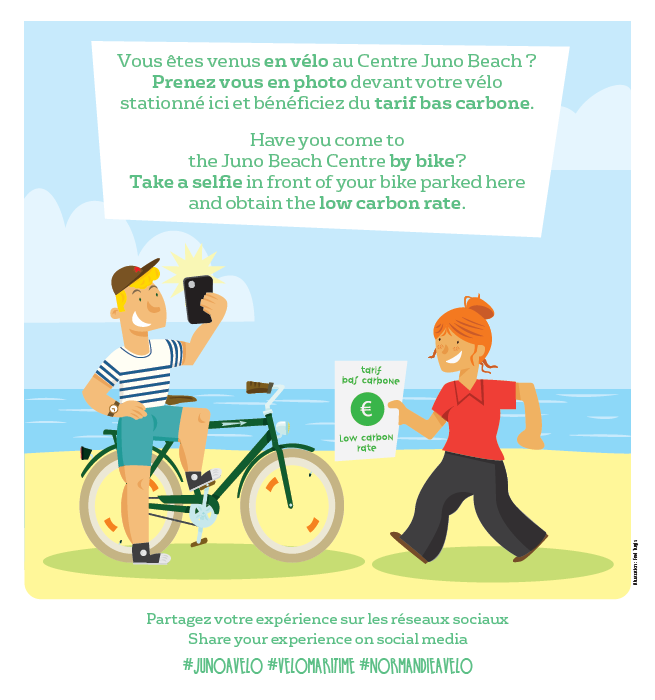
Low Carbon Rate
Visitors who come to the Juno Beach Center by bike benefit from our reduced rate.
Take a photo of you and your bike at the bike station and receive the low carbon rate.
Most visitors come to the museum by car and so the objective of our low carbon rate is to encourage our visitors to come by bike more often than by car.
In 2019, when we carried out our Greenhouse Gas assessment, it revealed that 80% of our total emissions came from the transport used by our visitors.
CYCLING ROUTES AROUND THE MUSEUM
The Juno Beach Centre is located in Courseulles-sur-Mer, on the seafront in magnificent Juno Park. A natural setting where biodiversity and vestiges of the Second World War coincide. This territory is near or crossed by several major routes:
The Maple Leaf Route Cycling Tour. Departing from the Juno Beach Centre, the Tour continues through the Normandy hinterland and then heads north to the port of Dieppe. It also features additional tours – namely the American and British landing beaches, as well as the First World War Memorial at Vimy Ridge. The Maple Leaf Route Tourist Guide, on sale at the JBC store and online, is a 130-page book in colour that contains important information. There you will find maps with different routes, historical overviews, and detailed information about each tour and route.
The Vélo Maritime is a bike route from Roscoff in Brittany, to Dunkirk, on the Belgian border. This route goes through Courseulles-sur-Mer, near the Juno Beach Centre. This route crosses legendary sites such as the Pink Granite Coast, Mont-Saint-Michel and its bay, the Landing Beaches, the cliffs of Etretat, the Bay of Somme and the Opal Coast. It is an ideal cycling route for cyclists looking for an escapade, a challenge, and a cultural and gastronomic discovery.
The D-Day Landing Beaches route to Mont Saint Michel is located west of the Juno Beach Centre. This bicycle route guides cycle tourists in the footsteps of History and the Battle of Normandy. This section follows small roads allowing you to admire by bike the richness of the Bessin buildings and the landscapes of the Norman Bocage.
The Vélo Francette is a continuation of the Vélo Maritime near the town of Courseulles-sur-Mer. This 600km bike from Ouistreham to La Rochelle crosses Normandy, the Pays de la Loire and Poitou-Charentes.
There are many other bike routes in Normandy to discover Région Normandie, Calvados Attractivité, Terre de Nacre Tourisme or Bayeux Tourisme.
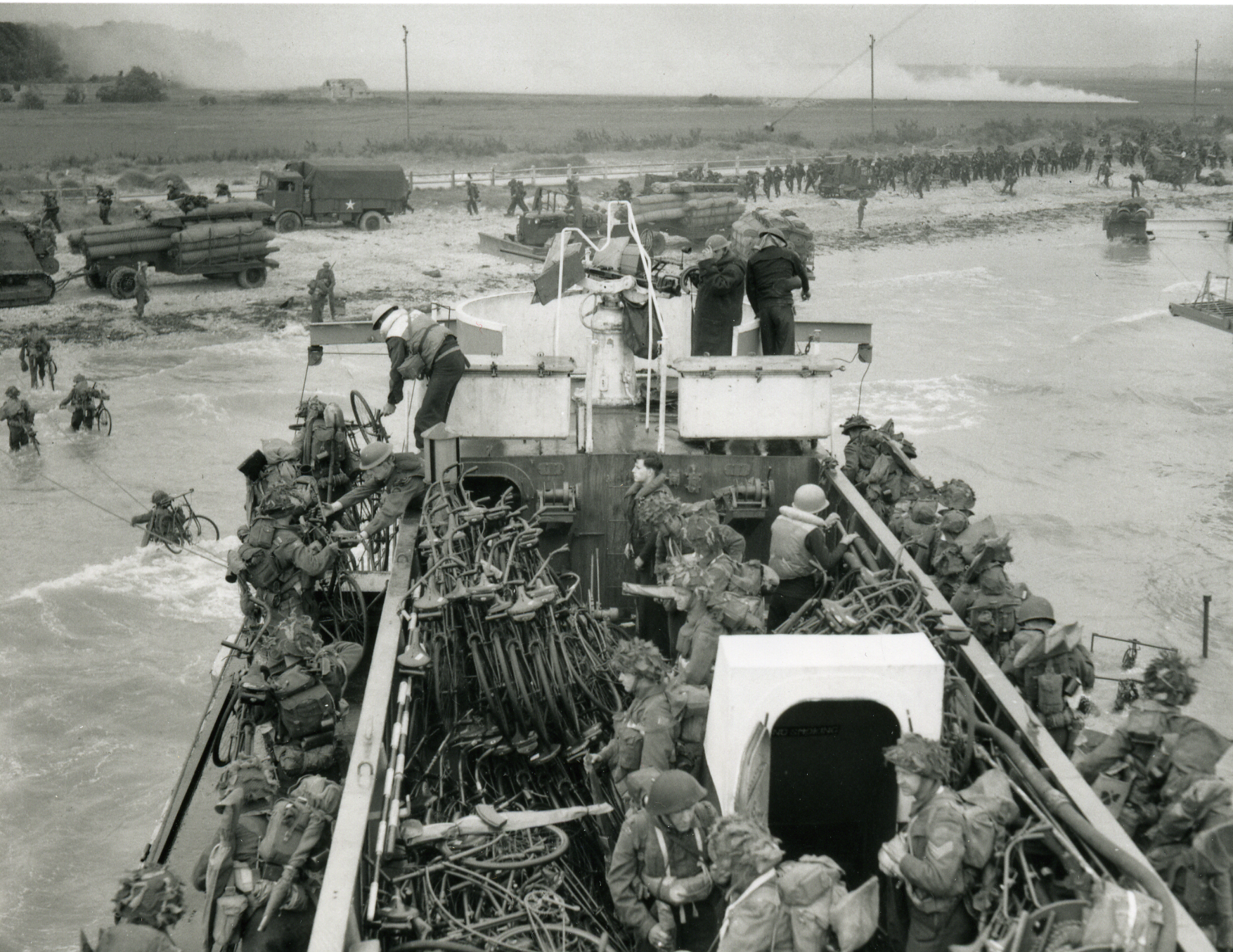
The bicycle is an important symbol of the story told at the Juno Beach Centre
On June 6, 1944, folding bicycles were part of the equipment of some of the Canadian troops landing on Juno Beach. Upon entering the Juno Beach Centre, you will be able to discover one of these bikes with all its history.
The bicycle is an important symbol of the story told at the Juno Beach Centre
On June 6, 1944, folding bicycles were part of the equipment of some of the Canadian troops landing on Juno Beach. Upon entering the Juno Beach Centre, you will be able to discover one of these bikes with all its history.
Donate
to the JBC
As a primarily privately-funded museum, it’s our donors who have made the dream of the Juno Beach Centre a reality.
Learn more about the unique initiatives you can help fund or make a gift to our general fund today to honour the legacy of Canada’s Veterans and ensure their story continues to be told.