
Dispatches
Welcome, Anika Schreiber!
Our team is expanding! In May, we introduced a new summer student onto the JBCA staff: Anika Schreiber, our Museum Project Assistant. Anika has primarily been assisting with our Legacy of Honour project, as well as a new upcoming temporary exhibition. Learn a bit about Anika’s background and her unique family history; as the great-granddaughter of refugees of the Third Reich, Anika is sharing how they created a new life for themselves as Canadian citizens at the dawn of the Second World War:
“I have always had a passion of history, and that passion has been rooted in the love and respect that I have for my family. One of my earliest introductions to historical storytelling and remembrance was during childhood, when my dad would recount our family’s story of escaping Czechoslovakia during the Nazi annexation of the Sudetenland. My great-grandfather, Kurt Schreiber, was a Sudeten-German from Moravia, a border region between Austria and Germany, when Hitler came into power in 1933. Kurt was part of the wealthy bourgeois class in Breclav and was very well-educated, working as a successful agronomist employed by the Czech government to direct the agricultural activities of an important sugar beet complex. In the interwar period, much of the produce that he oversaw was exported to Germany and Austria, but after Hitler announced his plans to annex Czechoslovakia in 1936, the government halted all exportation to Germany. This was perceived as an act of “economic terrorism” by German officials of the Third Reich, and my great-grandfather and his business associates were subsequently blamed for the embargo and blacklisted.
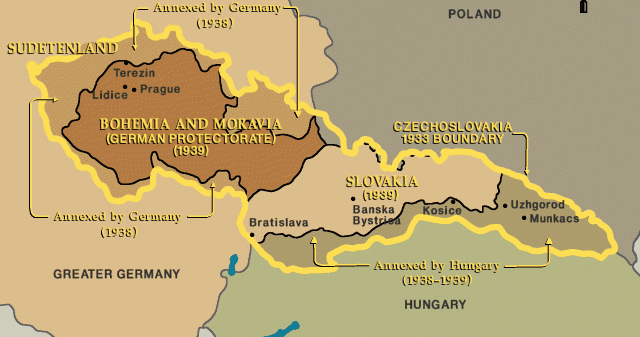
In March of 1938, Neville Chamberlain, the Prime Minister of Britain, announced that the Western powers would not intervene if Hitler annexed the Sudeten part of Czechoslovakia – which he promptly did. Virtually all of the sugar beet installations that my great-grandfather operated were in the ceded area, leaving him and his associates vulnerable to the wrath of the Nazi forces. However, fortunately for my family, in 1936 the Dominion Sugar Company of Canada was setting up shop in Southern Ontario, and was specifically looking to establish sugar-beet operations. However, lacking expertise in sugar beet husbandry, they contacted the Czech government in hopes of bringing my great-grandfather on board. Although he initially rejected the offer, because he spoke no English and maintained deep familial, economic, and emotional ties to his Moravian homeland, the Canadian Pacific Co. Offices in Prague nonetheless had a Visa issued in the name of Kurt Schreiber. Fast-forwarding to 1938, with very real danger looming, my great-grandfather decided to emigrate to Canada with his wife and son, on the condition that he work as a farmer in Ancaster, Ontario for Canada’s Department of Agriculture. His business partners in Nazi-occupied Czechoslovakia were not so fortunate; while some were able to safely escape the country, others mysteriously disappeared.
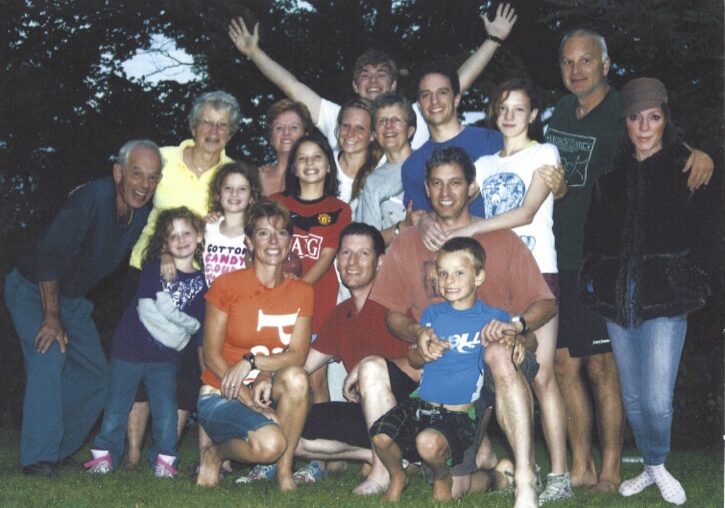
As a child, listening to the story of my great-grandfather’s narrow escape from Nazi forces captured my imagination and allowed me to develop a deeper sense of connection to my ancestry, and to figures of the past more broadly. Each summer I fly east to see my extended family in Ontario, and with every visit I reflect on the resilience, bravery, and adaptability of our forebears, who travelled across the world to escape their persecutors with no English language skills and very little knowledge of what awaited them in Canada. With every visit, I am reminded of how grateful I am to live in the future that my predecessors fought for. Now, as a History student at UBC and an aspiring professional historian, I look forward to lending my voice to trailblazing figures of the past like Kurt Schreiber. I hope I may begin this important work with the JBCA this summer!”
See more


Donate
to the JBC
As a primarily privately-funded museum, it’s our donors who have made the dream of the Juno Beach Centre a reality.
Learn more about the unique initiatives you can help fund or make a gift to our general fund today to honour the legacy of Canada’s Veterans and ensure their story continues to be told.