
Dispatches
In the Footsteps of Paul-Émile Barette
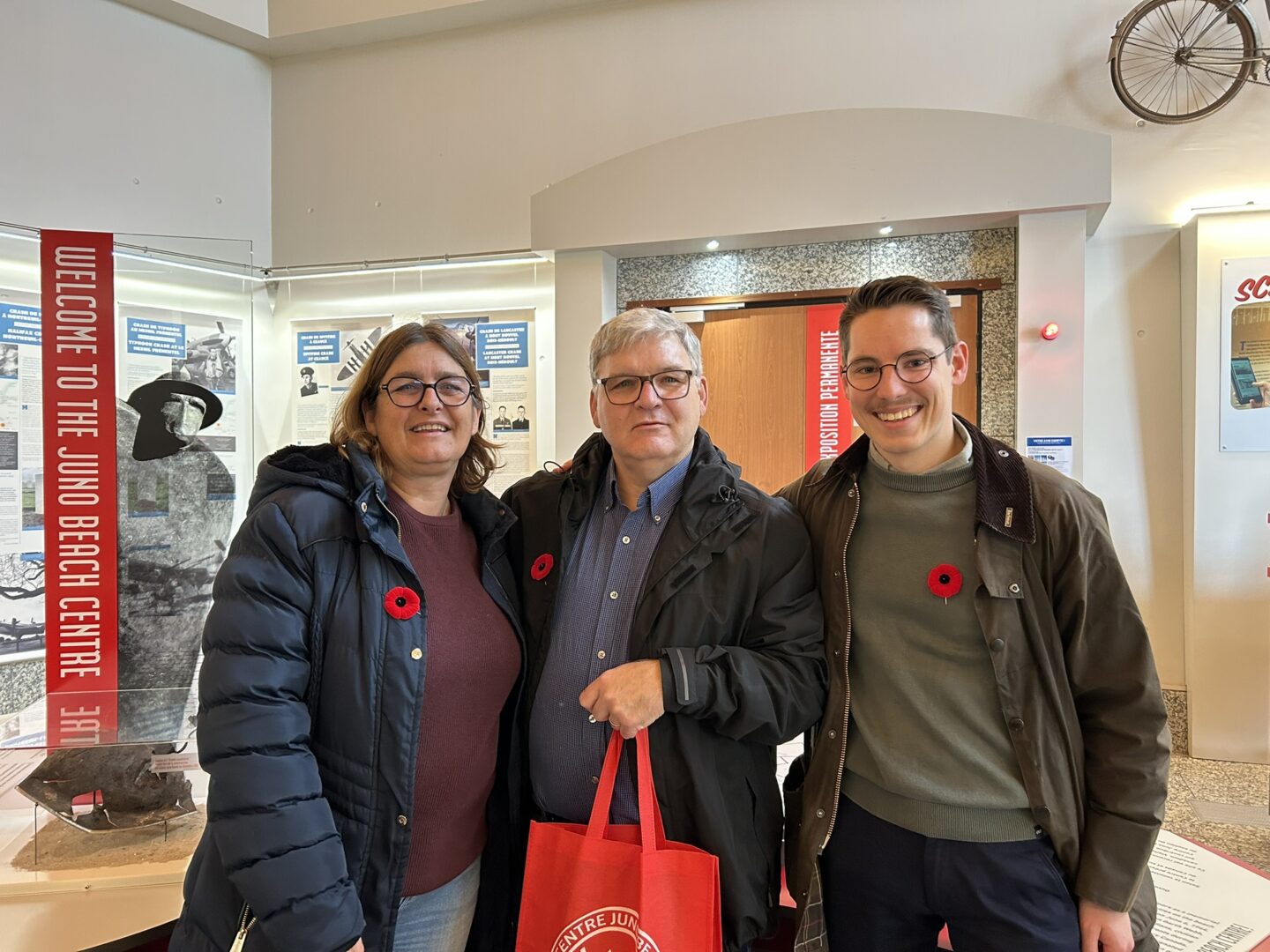
On Wednesday, November 5, the Juno Beach Centre had the pleasure of welcoming Mario Barette, great-nephew of Canadian soldier Paul-Émile Barette, who was killed in Normandy on June 6, 1944. Mario was accompanied by Pierre-Aldric Leurs, president of the Beaver Sam Association and an enthusiast of the Royal Canadian Engineers (RCE).
It all began a few years ago when Mario started researching his great-uncle, a sergeant in the 16th Regiment of the RCE who was killed on D-Day. Through the internet, he connected with Pierre-Aldric Leurs, a young history enthusiast from Lille, France, who offered to help him in his search. Pierre-Aldric carried out extensive research to trace Paul-Émile Barette’s story and sought the help of genealogist Sibylle Hecht. Together, they identified the site of the temporary cemetery in Bernières-sur-Mer, where Paul-Émile was first buried before being transferred to the Bény-sur-Mer Canadian War Cemetery.
In the autumn of 2025, Mario was finally able to make this long-awaited journey. Thanks to Pierre-Aldric’s efforts, everything was planned: they began with a stop in Beuzeville, the town from which their ancestor Jean Barette had left for New France in 1646. They then visited the D-Day landing sites, including the Juno Beach Centre, before travelling to Bernières-sur-Mer, where Paul-Émile had both landed and been temporarily buried. The pilgrimage concluded with a moving moment at Paul-Émile Barette’s grave in the Bény-sur-Mer Canadian War Cemetery, where Mario paid tribute to his great-uncle.
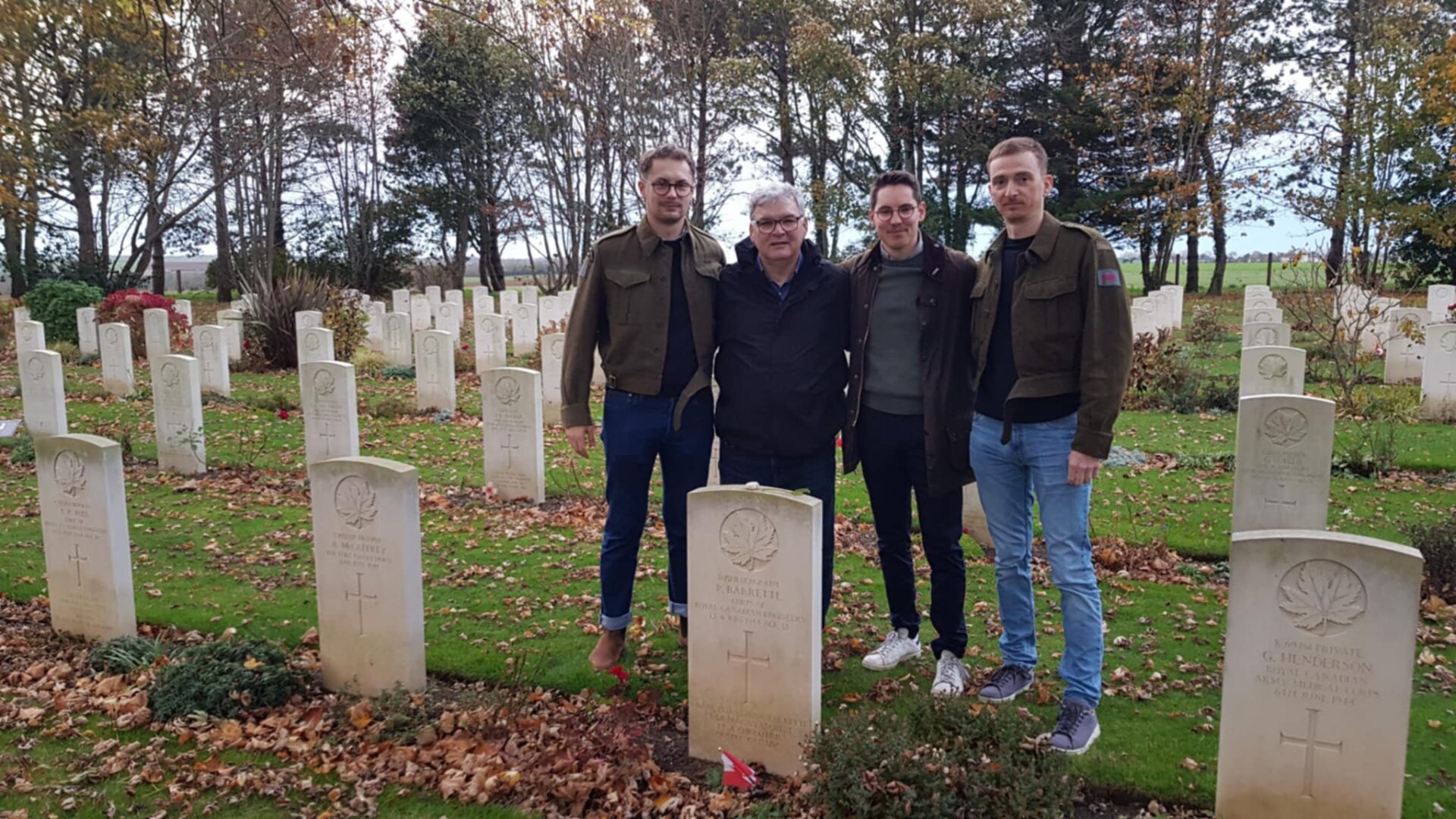
In the account he shared to mark the 80th anniversary of D-Day, Mario wrote:
“When our ancestor Jean Barette left Beuzeville in 1646 for New France, he surely could not have imagined that 300 years later, one of his descendants would make the journey in reverse — and for the purpose of liberating his motherland, France.”
Born in Chicoutimi on September 10, 1910, Paul-Émile Barette voluntarily enlisted in 1940 at the age of 30, leaving a stable job as a mechanic at the Beauharnois Light, Heat and Power Corporation, a jewel of Quebec engineering. After rigorous training with the 16th Regiment of the Royal Canadian Engineers, he sailed for the United Kingdom in June 1941. Promoted to sergeant, he helped prepare for the assault on the Normandy beaches.
On June 6, 1944, he landed in the Nan Red and White sector of Juno Beach near Bernières-sur-Mer, alongside the troops of the 3rd Canadian Division. His mission: to clear mines and obstacles to allow infantry and tanks to advance inland. Paul-Émile Barette was killed that day, likely near the entrance to Saint-Aubin-sur-Mer. He was the second Canadian of the RCE to be killed on D-Day, but the only member of his regiment who fell on 6 June to be laid to rest in the Canadian cemetery
By coincidence, Shana Quesnel, one of our Canadian guides in the summer of 2024 had chosen to write his biography as part of the Guide Program. More information
As Remembrance Day approaches, Mario placed a poppy at the Juno Beach Centre in memory of his great-uncle — a simple yet profoundly meaningful gesture.
Paul-Émile Barette will be among the 381 Canadians whose names will be engraved on the upcoming Concordia Project monument. More information
Our heartfelt thanks to Mario for his visit, to Pierre-Aldric for his dedication, and to Sibylle for accompanying them on this deeply meaningful journey along Juno Beach.
See more


Donate
to the JBC
As a primarily privately-funded museum, it’s our donors who have made the dream of the Juno Beach Centre a reality.
Learn more about the unique initiatives you can help fund or make a gift to our general fund today to honour the legacy of Canada’s Veterans and ensure their story continues to be told.







