
Dispatches
FAREWELL STUART LOUIS JOHNS (1925-2023)
It is with a heavy heart that we learned of Stuart “Stu” Louis Johns, D.C.M., passing on November 9th, 2023, in Windsor, Ontario, at the age of 98. The Juno Beach Centre (JBC) would like to express its sincerest condolences to his loved ones and offer eternal gratitude for Guardsman (Ret’d) Johns’ heroism during the Second World War.
S. L. Johns was born in Walkerville, Ontario, on February 11th, 1925. He grew up in the Windsor area during the Great Depression–though the conditions of the period had a minimal impact on the family as his father held a job at the Hiram Walker & Sons Distillery as a stationary engineer. Johns’ father was also a Great War veteran, so upon the war’s commencement in Europe, his sons were eager to “play their part.” Although Johns’s brother met the minimum age requirement first, an injury delayed his enlistment. After completing high school, Johns and two of his friends promptly enrolled at the local armoury in June of 1943. He ultimately joined the army and attended basic training at No. 12 Canadian Army Training Centre in Chatham, Ontario.
Johns was then sent to complete advanced training at Camp Borden (Ontario), where he got his first taste of the armoured corps. Here, he developed his driving, gunnery, and wireless competencies. Thereafter, Johns found himself in Camp Windsor (Nova Scotia) for a brief stint prior to his deployment overseas. Fortunately for Johns, he had made the right choice in joining the army; he was seasick for much of his voyage aboard the SS Nieuw Amsterdam bound for Greenock, Scotland.
Once in England (and upon solid ground), Johns was stationed in the town of Woking in March of 1944. In April, he was reassigned to a tank unit in the 4th Canadian (Armoured) Division’s Canadian Grenadier Guards in Aldershot. Until June, he honed his skills as a tanker, formally training as a loader-operator on the Sherman V (M4A4). Very little actual training could be conducted using the tanks because they had been prepared for the invasion and, thus, were waterproofed and, therefore, could not be moved. Nevertheless, these months proved critical as Johns learned his role and bonded with the others in his crew–just in time for the Battle of Normandy.
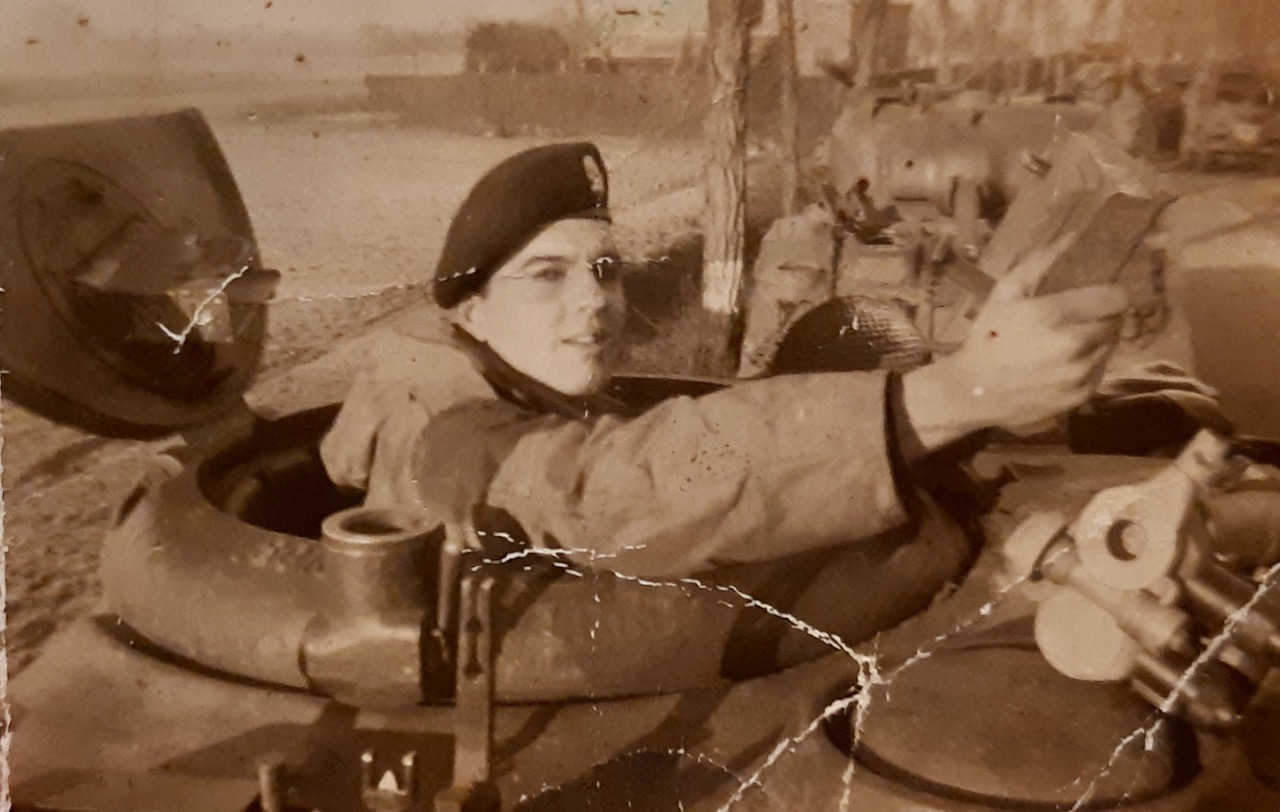
S. Johns and his comrades landed on Juno Beach seven weeks following the events of D-Day on June 6th, 1944. His tank was positioned in the western sector of the Juno beachhead, near Bayeux, conducting patrols and observing enemy movements. In early August, Johns experienced combat for the first time during Operations Totalise and Tractable. Totalise was the Canadian Army’s attempt to act as a spearhead, breaking through the German forces beyond Caen and trapping them. Overall, the push succeeded. However, many German troops managed to fall back to a feature popularly known as the Falaise Gap.
During this advance, Johns’ tank was disabled; as such, he and his crew were temporarily out of the action and placed in a tank recovery unit. Not long after that, they were back on the frontlines, participating in the Battle of the Falaise Pocket. This fight was an especially lethal portion of the Normandy campaign. While out on patrol amid this battle, Johns’ tank spectacularly captured several German soldiers. Toward the end of August, the 4th chased the retreating enemy across the Seine River near Elbeuf. After this, multiple Allied tanks, including Johns’, were pulled off the lines for a resupply. It was then that Johns’ close friend and tank commander, Corporal Vern Boudreau, was fatally wounded by mortar fire.
The Grenadier Guards followed the path carved by the Canadian Army through Northern France and onto Belgium and then Holland, participating in devastating combat at places such as the Scheldt. By the winter of 1944, the Canadian forces patrolled the Rhine and the Maas rivers. Major advances could not be attempted at this time because the weather was unfavourable, and there was a significant strain on supply lines. Hence, Johns and his crew spent three weeks billeted in various Dutch homes–the Dutch proved to be extraordinary hosts. In Johns’ words, “we got to know the Dutch families fairly well . . . In recent years on a trip over there, we made contact with this family again, which was quite an enjoyable experience.”
The Allied advance resumed in February of 1945, resulting in a series of battles to clear the area up to the Rhine River. By March of 1945, crossings were made by the army, with the armoured division bringing up the rear part of the columns. Advancing through the extreme eastern side of the Netherlands, the division gradually pushed further into occupied Europe, gaining a foothold in northwest Germany during the last months of the war. But the conditions were wet, confining the tanks to the roadways and resulting in extremely tenuous skirmishes.
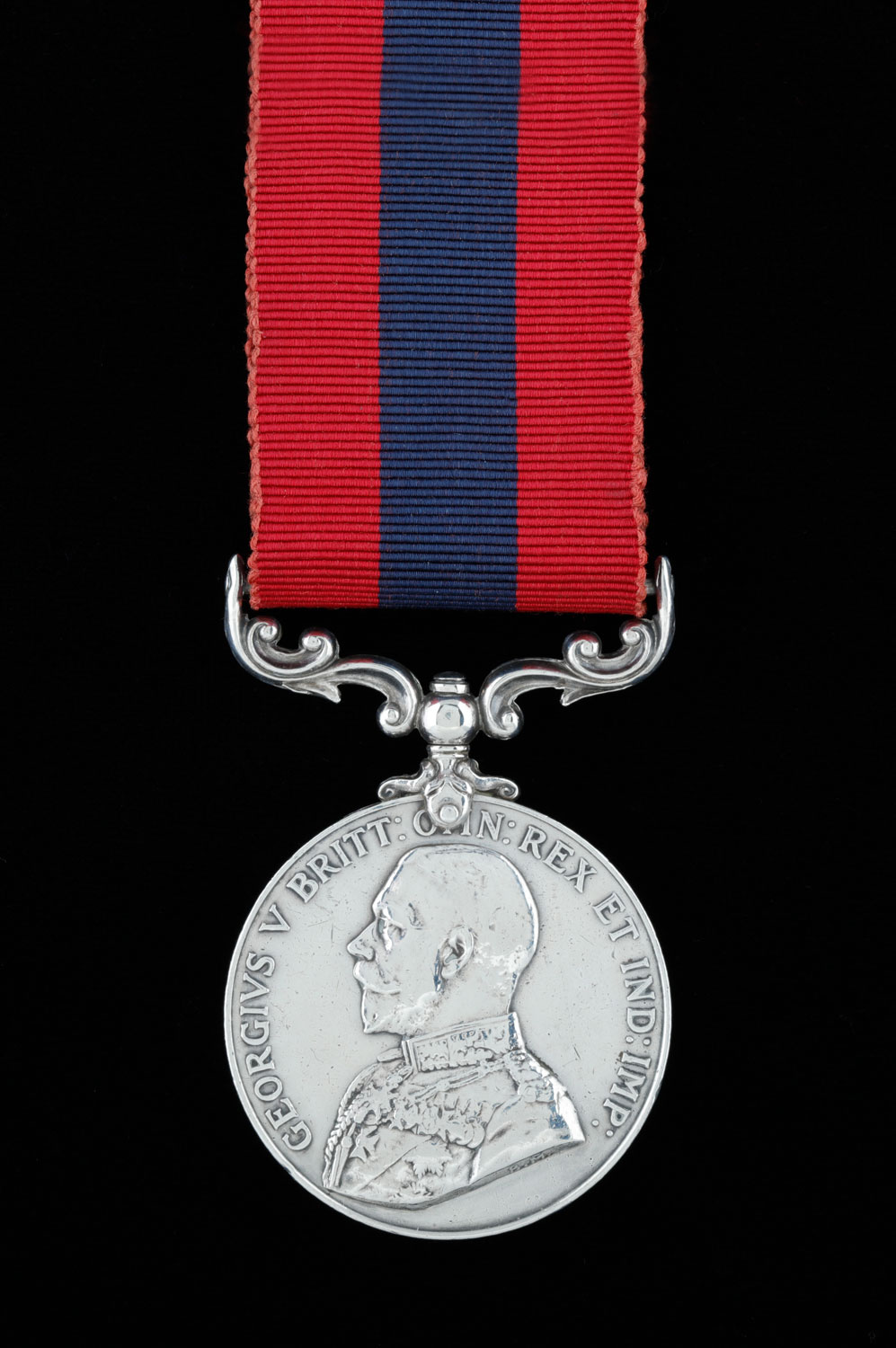
The front stalled at Küsten Canal in early April of 1945–Guardsman Johns, now a tank commander, was involved in this two-day attack aimed at rupturing the stalemate. He was awarded the Distinguished Conduct Medal (D.C.M.) for his bravery, a medal second only to the Victoria Cross (V.C.). On the evening of May the 4th, Johns and the 4th Division received word that a ceasefire had been arranged, and his unit was ordered to hold the position. The next day, their war concluded at eight o’clock in the morning in a small village approximately six miles from the town of Oldenburg.
For many, the lack of fanfare was underwhelming; Johns remarked, “. . . there were no bells or fireworks . . . Everything was very quiet, and no visual celebrating or anything going on among us. Everyone was quite relieved and more or less sat around and did nothing for the rest of the day . . . that was our V-E Day celebration.”
With the war behind him, Johns returned to Walkerville and married Flo Draper on August 15th, 1945. They raised three children, Nancy, Jo-Anne, and Beth. Johns attended the Haileybury School of Mining and worked for Hollinger Mines in Timmins until the family returned to Windsor in 1950 due to Flo’s paralysis by polio.
Like his father, Johns worked as a stationary engineer at Hiram Walker & Sons Distillery and, later, Ford Powerhouse. After retiring in 1987, Johns travelled Europe with his wife, daughters, and grandchildren, retracing his wartime path. In 2019, Johns attended the 75th anniversary of the June 6th, 1944, D-Day landings in Normandy, France. During this visit, he and his family made stops at the graves of each of the four tank commanders he had served under.
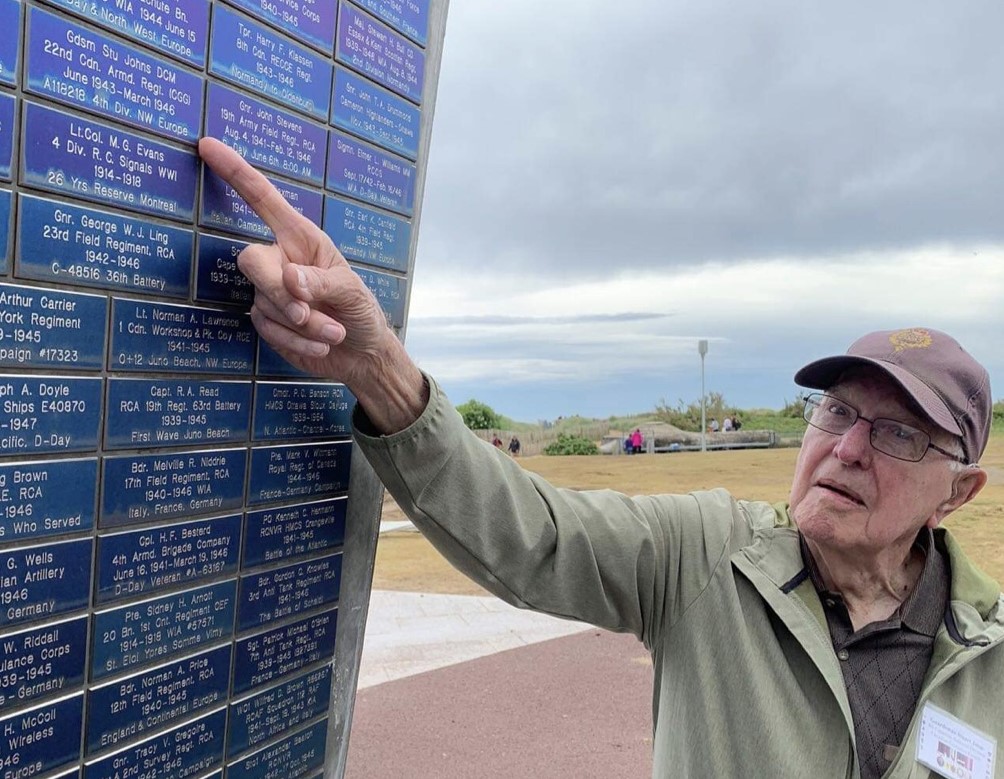
Presently, Guardsman (Ret’d) Stuart Johns, D.C.M., is commemorated on a brick bearing his name, rank, and theatre of service at the Juno Beach Centre in Courseulles-sur-Mer, France.
Johns’ brick is among thousands at the Juno Beach Centre. This commemorative and fundraising program helps the JBC continue its mission to preserve the legacy of Canadian service and sacrifice during the Second World War. We will never forget those who led from the front, such as Johns, fighting to secure a better world for future generations.
Remember Today, Remember Always.
See more


Donate
to the JBC
As a primarily privately-funded museum, it’s our donors who have made the dream of the Juno Beach Centre a reality.
Learn more about the unique initiatives you can help fund or make a gift to our general fund today to honour the legacy of Canada’s Veterans and ensure their story continues to be told.