Dispatches
FAREWELL QAPIK ATTAGUTSIAK ᑕᕝᕙᐅᕗᑏᓪ ᖄᐱᒃ ᐊᑕᒍᑦᓯᐊᖅ (1920-2023)
Today, the Juno Beach Centre would like to extend its sincerest condolences to the loved ones and friends of Qapik Attagutsiak, who passed on December 14th, 2023, in Ottawa, Ontario. Attagutsiak was the last living Inuk person known to have participated in the Arctic bone-collecting initiative as part of the war effort during the Second World War.
On September 10th, 1939, Parliament passed the Department of Munitions and Supply Act. This legislation aimed to centralize and coordinate the sourcing of resources and industrial production. Accordingly, the Department of National War Services–the entity that headed the drive–encouraged all Canadians to gather rags, rubber, paper, metals, fats, and bones to be turned into war materials.
Fearing similar shortages to those of the First World War (1914-1918), the Canadian federal government launched the National Salvage Campaign in 1940, requesting the aid of Inuit inhabiting the eastern Arctic to gather animal bones for use in war-related industries. Bones were a critical ingredient in the manufacturing process of cordite, an explosive substance used in artillery shells. Notably, cordite was also used in aircraft glue and fertilizer.
Qapik Attagutsiak was born on June 11th, 1920, in Siuraq, between Igluligaarjuk (Chesterfield Inlet) and Coral Harbour, in the Kivalliq region. Her parents were leaders in her community; Attagutsiak’s father, Quliktalik, was a renowned hunter, and her mother, Pakak, was a seamstress. She and her family lived in tents in the spring and summer, qarmaqs (sod houses) in the fall, and igloos during the winter. They travelled and hunted using dog teams, living off the animals they harvested and wearing clothes made from sinews and skins. At 18 years old, Qapik married a man called Attagutsiak, who was from the Netsilik region. The couple had 14 children, and Qapik adopted two others following her husband’s death.
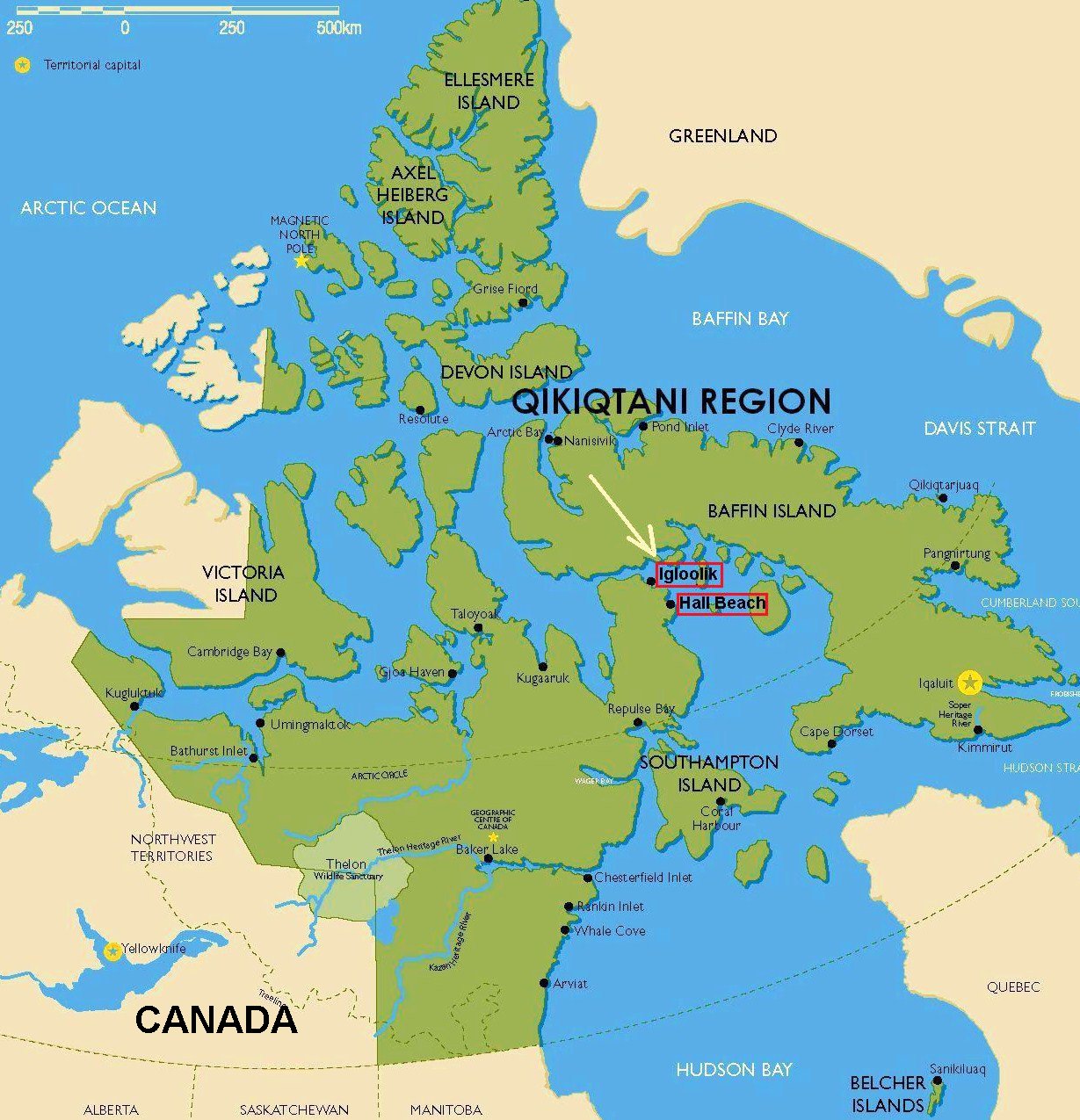
In May of 1940, Q. Attagutsiak was living in a camp in the Igloolik area. It was then that a Roman Catholic priest first told her of the Second World War and the salvage campaign. At 20 years old (and a new mother), she sprang into action. The first bones Attagutsiak collected were those of her family’s dog sled team, which had died due to disease while the family was camping at a walrus hunting area called Qaiqsunik, off Foxe Basin on an island near Igloolik in modern-day Nunavut. Her grandfather, Ullalaaq, packaged the bones into a mesh bag.
Attagutsiak would go on to use a burlap bag to carry out the rest of her collections and even brought her one-year-old son with her by placing him in an amauti—a traditional caribou parka with a built-in baby pouch. She started her search at the walrus harvesting grounds of her spring hunting camp in Qaipsunik. Her aim was to gather as many bones as possible to ship down south. Many other Inuit volunteered to collect wildlife carcasses, such as walrus and seals, for the war effort.
Q. Attagutsiak and other Inuit filled approximately three 125-pound bags daily for a week, though they continued their work until the war ended in 1945. The bags were subsequently loaded onto small boats for transfer to the RMS Nascopie (the steamship that the Hudson’s Bay Company used to resupply its posts in the eastern Arctic), which was bound for industrial ports across the nation, like Montreal and Halifax. Once at their destination, the bones were processed, rendered at plants, and turned into cordite.
After the war, Attagutsiak led a distinguished life. In 1947, she joined the Canadian Rangers–the organization (then) newly tasked with guarding Canada’s north. Perhaps her most significant contribution was her role as a midwife, helping deliver hundreds of babies–a job she had been doing since she was ten.
In addition, Attagutsiak played a major role in setting up the Akausivik Inuit Family Health Team and Medical Centre in Ottawa in 2005. The Centre continues to offer Inuit in Ottawa numerous health and well-being programs. Q. Attagutsiak, like her mother, was an accomplished seamstress up into her later years, making and selling traditional clothing such as kamiks (boots) and sharing the proceeds and the clothes with those in need in her community.
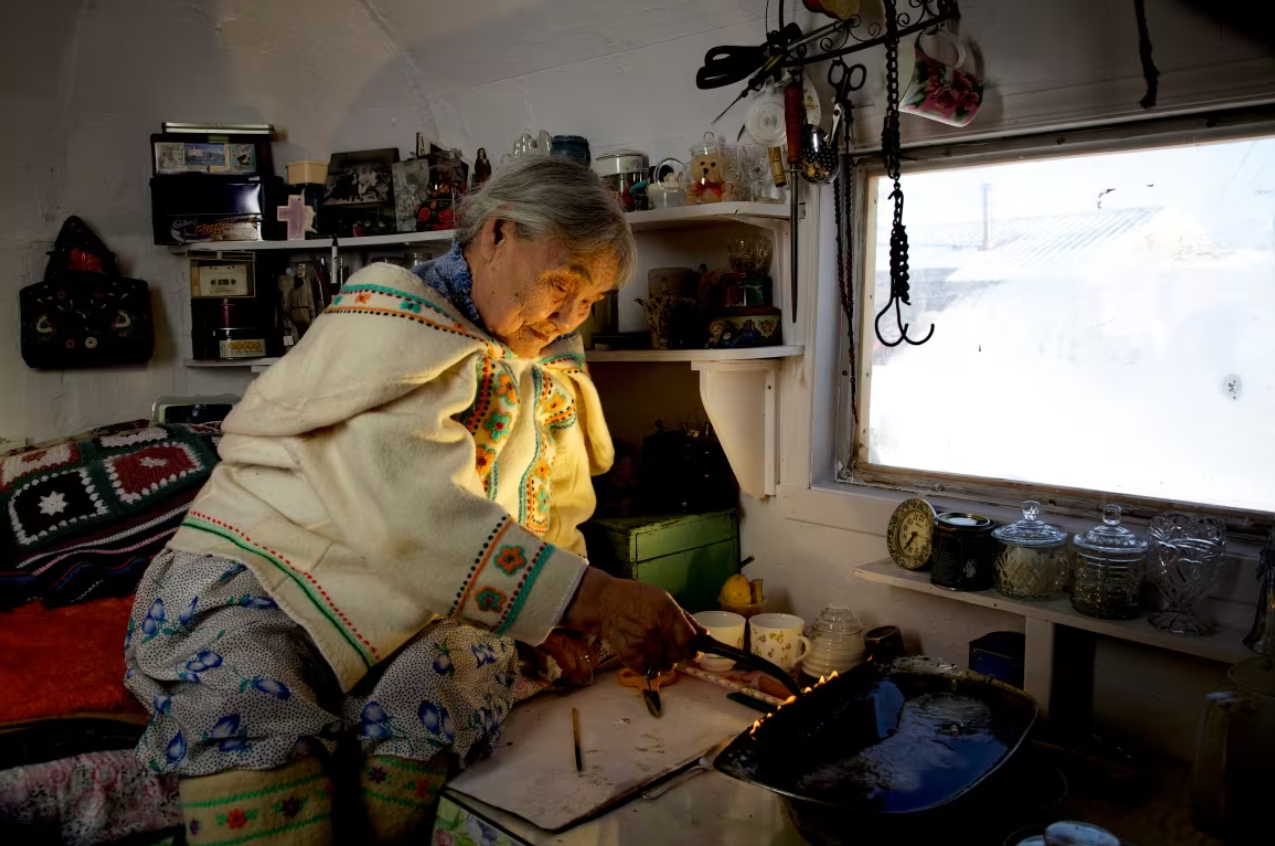
Such acts resulted in her receiving the Queen Elizabeth II Diamond Jubilee Medal in 2012, the Sovereign’s Medal for Volunteers for her expertise as a midwife and her knowledge of health care adapted to Inuit in 2020, and, in the same year, recognition via the Hometown Heroes program. The Hometown Heroes project commemorates people who contributed to Canada during the First and Second World Wars: Attagutsiak is one of less than 200 people honoured this way.
Attagutsiak will forever have our utmost respect and gratitude for her service and dedication to the Allied war effort. Thank you, Qapik, we will remember.
See more


Donate
to the JBC
As a primarily privately-funded museum, it’s our donors who have made the dream of the Juno Beach Centre a reality.
Learn more about the unique initiatives you can help fund or make a gift to our general fund today to honour the legacy of Canada’s Veterans and ensure their story continues to be told.