Dispatches
Commemorating Trooper Donald F. Galloway (1915-1976)
Did you ever wonder what your father did in the War? Most World War II veterans were reluctant to talk. Mine certainly was. He shared very little and just wanted to get on with life. He felt very fortunate he had survived. I knew the bare facts, that he had served with the Fort Garry Horse in a tank, that he had landed on Juno Beach on D-Day, that he had been badly wounded a few days later and returned to England and eventually Canada in a hospital ship. We did have one conversation about how his tank regiment had got much further inland on D-Day than the history books recorded. It annoyed him that this achievement was not recognized.
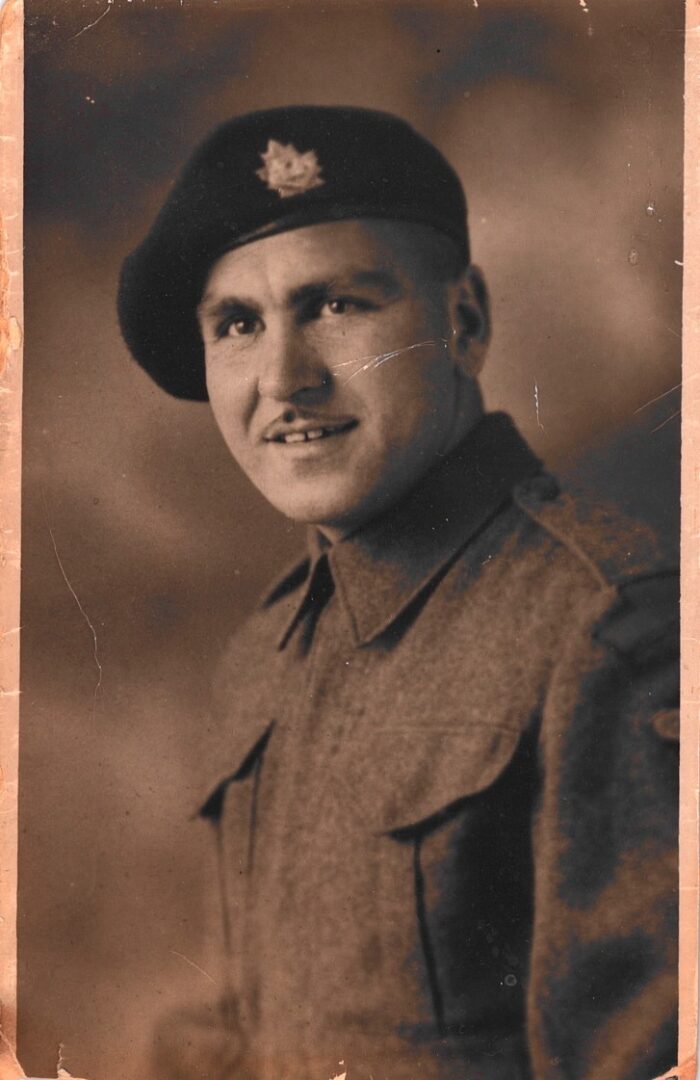
My father died far too young at age 60 in 1976. In 1977 I was able to contact his tank’s commander and another member of the crew to document his injuries in support of a pension for my mother. Also that year I travelled to Europe for the first time and saw Juno Beach. At some point my mother shared with me some documents, letters, photographs, news clippings and medals that he had kept. But I wanted to know more.
It was not until the 1990s that I got serious in my quest. Library and Archives Canada keeps individual military service records and it is possible to order a pdf. There you will find the complete military history of your relative. Most regiments keep a Regimental War Diary and I was able to obtain a copy of the Fort Garry Horse diary to read. My cousin began putting the contents of my aunt’s home in order when she moved to a retirement home in 2015. He gave me all the surviving letters my father had written to his parents during the war. He also gave me copies of letters written by my uncles—all five Galloway brothers had served and they met up in England when they could.
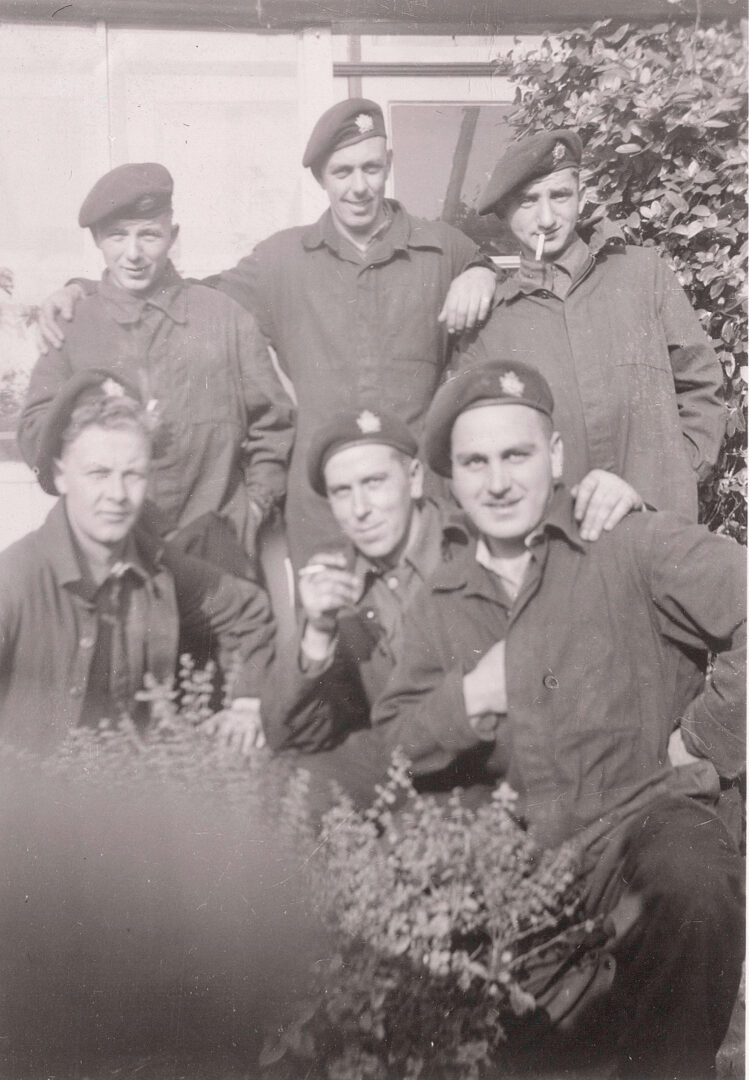
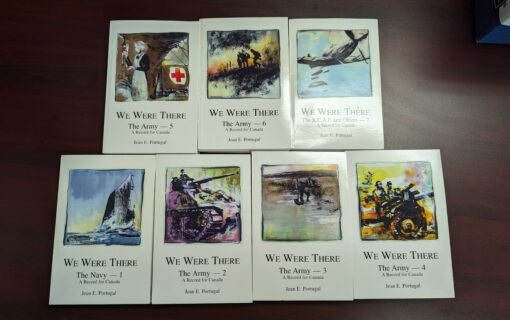
Another invaluable resource was the oral history, We Were There, which provided me with a detailed account of my father’s tank on D-Day. You may find that your relative or someone who knew them was interviewed. I wrote the historian, Mike Bechtold, with my questions and he replied. I visited the Base Borden Military Museum, which holds a significant collection of WWII armoured vehicles.
Finally in 2022 I felt I had gathered everything available and wrote my father’s story. There is a link to it from this blog. The history I collected changes as I learn more and I have just added a one-page appendix at the end of an account by a fellow trooper who saw my father’s tank being hit.
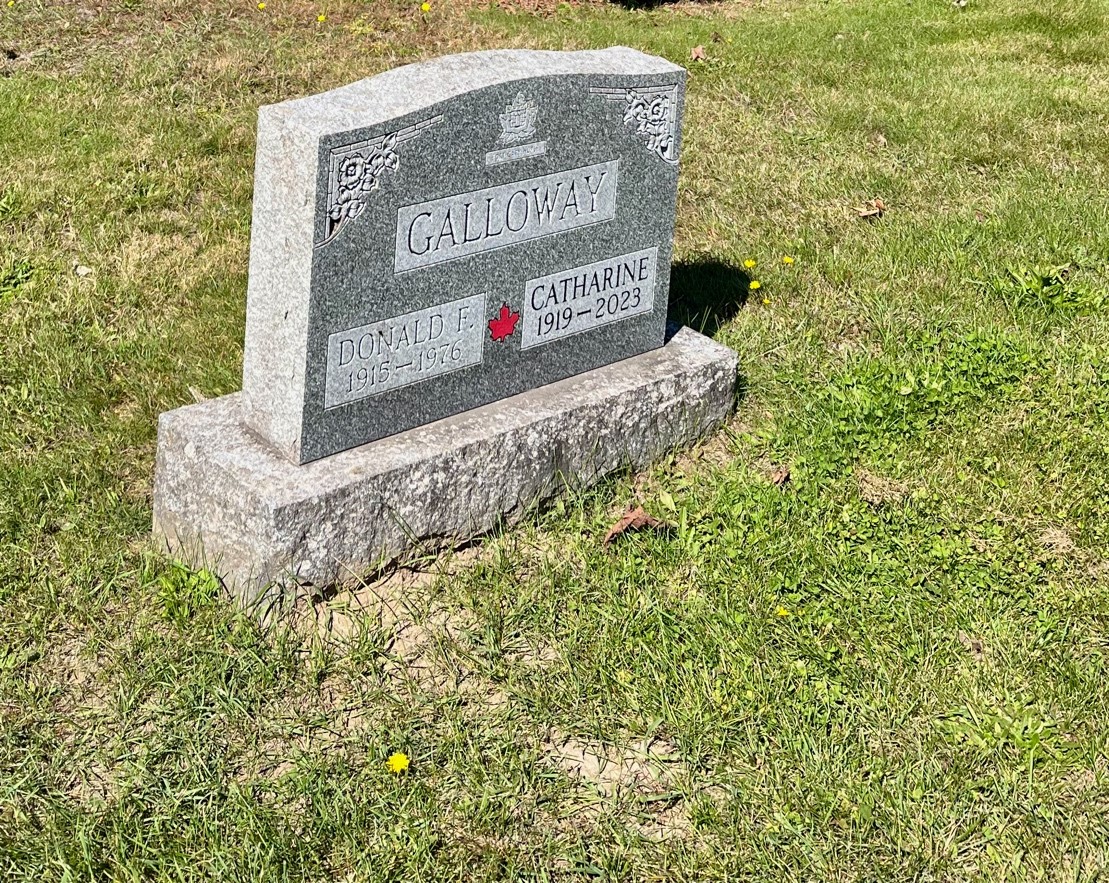
After a long life my mother died earlier this year at the age of 104. When my father died she had the Fort Garry Horse emblem engraved on his stone. She buried him with his Canada Flag pin as he had been a big supporter of the adoption of the Maple Leaf flag. There was considerable opposition to it from the Royal Canadian Legion to which he belonged. She asked my sister and I to have a red maple leaf engraved and painted on their stone and this we have done.
We, together with our mother, also commemorated Don on a brick at the Juno Beach Centre. In addition, we sponsored a brick in memory of dad’s buddy and crewmate (driver), Trooper Michael Marchisky, who was killed in the same incident that badly wounded dad.
– Written by Sheila Turcon
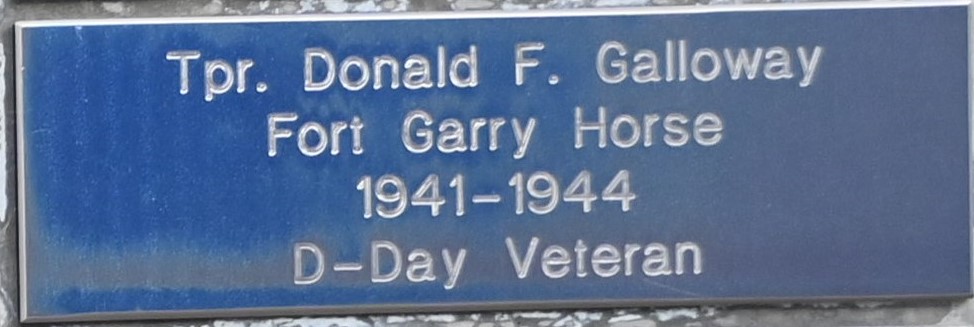
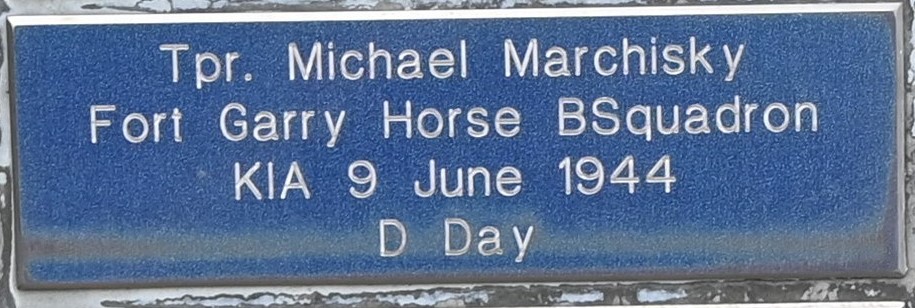
Thanks to generous contributions like the one made by Sheila, her sister Susan Turner, and their mother, Catharine, the Juno Beach Centre can continue its mission to preserve the legacy of Canadian service and sacrifice in the Second World War. We will never forget the role of young men like Trooper Don Galloway, who fought to ensure future generations would inherit a better world.
Remember Today, Remember Always
See more


Donate
to the JBC
As a primarily privately-funded museum, it’s our donors who have made the dream of the Juno Beach Centre a reality.
Learn more about the unique initiatives you can help fund or make a gift to our general fund today to honour the legacy of Canada’s Veterans and ensure their story continues to be told.