Dispatches
Commemorating Private Howard William Avery
The story of Veterans returning from the Second World War is all too common: they came home bearing the weight of their experiences, often choosing silence over sharing. Among them was Private Howard William Avery, who found a unique voice in the face of his unspoken memories. Instead of words, he picked up a pencil, capturing the complexity of war through cartoons that reflected both the absurdity and the gravity of his experiences. His drawings became a bridge, offering his family and friends glimpses into the aspects of conflict he struggled to articulate.
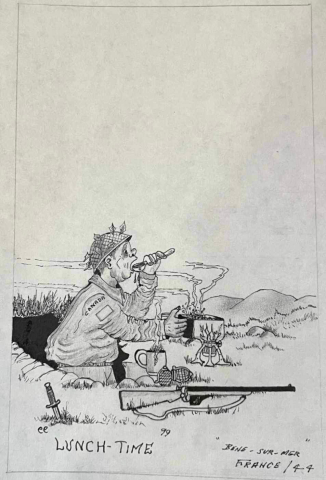
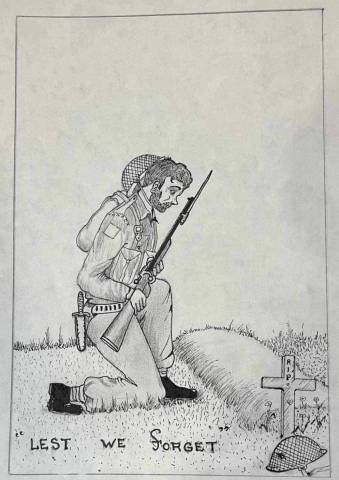
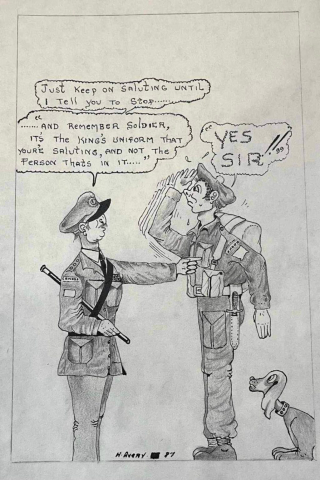
Born in 1922 in Canso, Nova Scotia—a small community on the northeastern tip of the province—Howard was one of five siblings, all of whom served in the war and returned home.
He enlisted in the Canadian Army on February 3, 1943, with initial training in New Brunswick, Canada before being shipped off to Leeds, England. He was 21 years old.
While in training in Leeds, Howard ran into Joe, a school mate from back home. After a few pints to celebrate their reunion, Joe had Howard promise to look after his fiancée if he didn’t make it back. Joe was wounded in action and died in a POW camp.
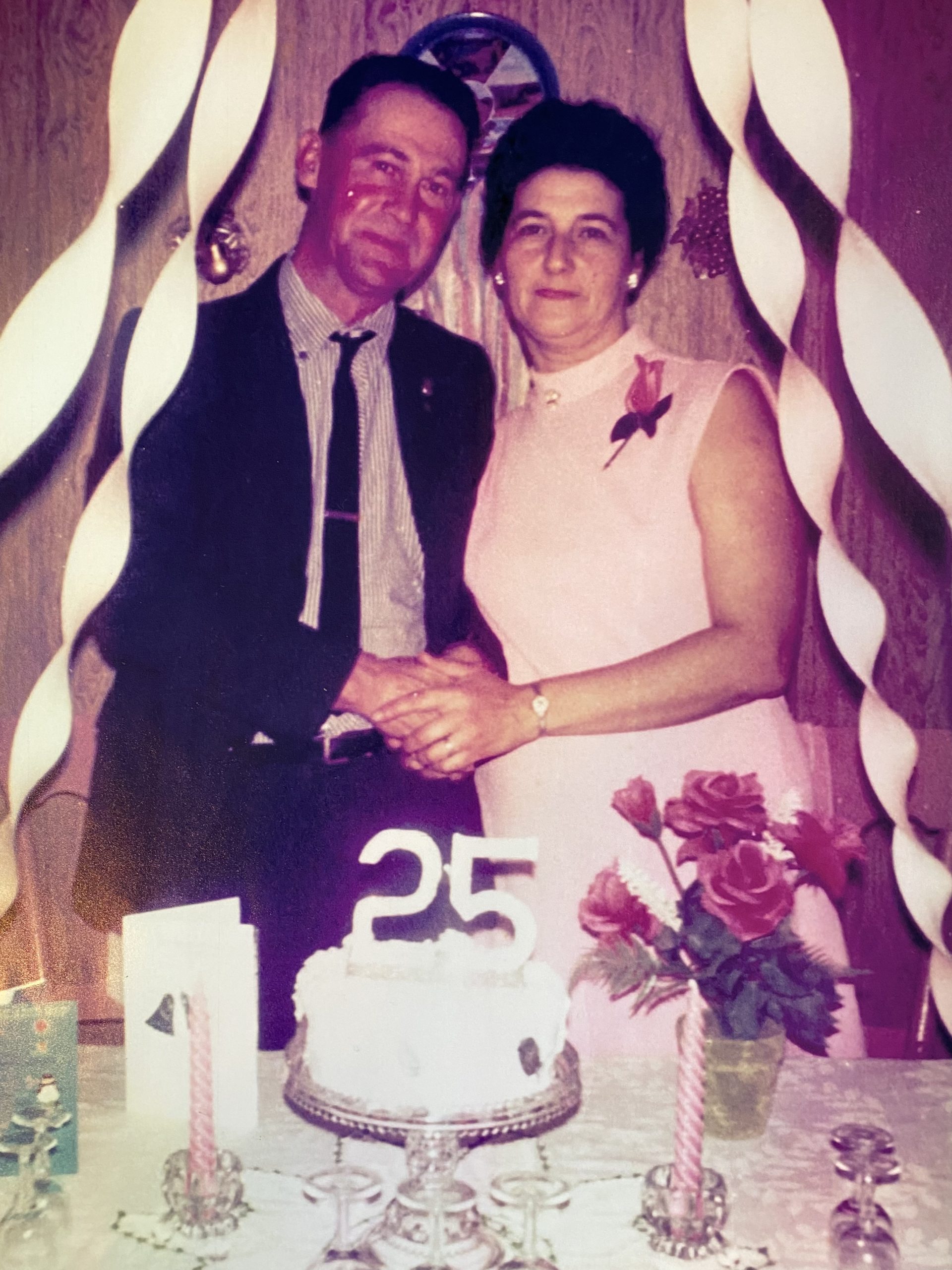
Barely seven months after he was discharged, keeping his promise to Joe, Howard met Thelma Hurst, and to their surprise they fell in love, and were married. Residing in Canso, they raised four children and were together for 55 years, until his passing in 2001.
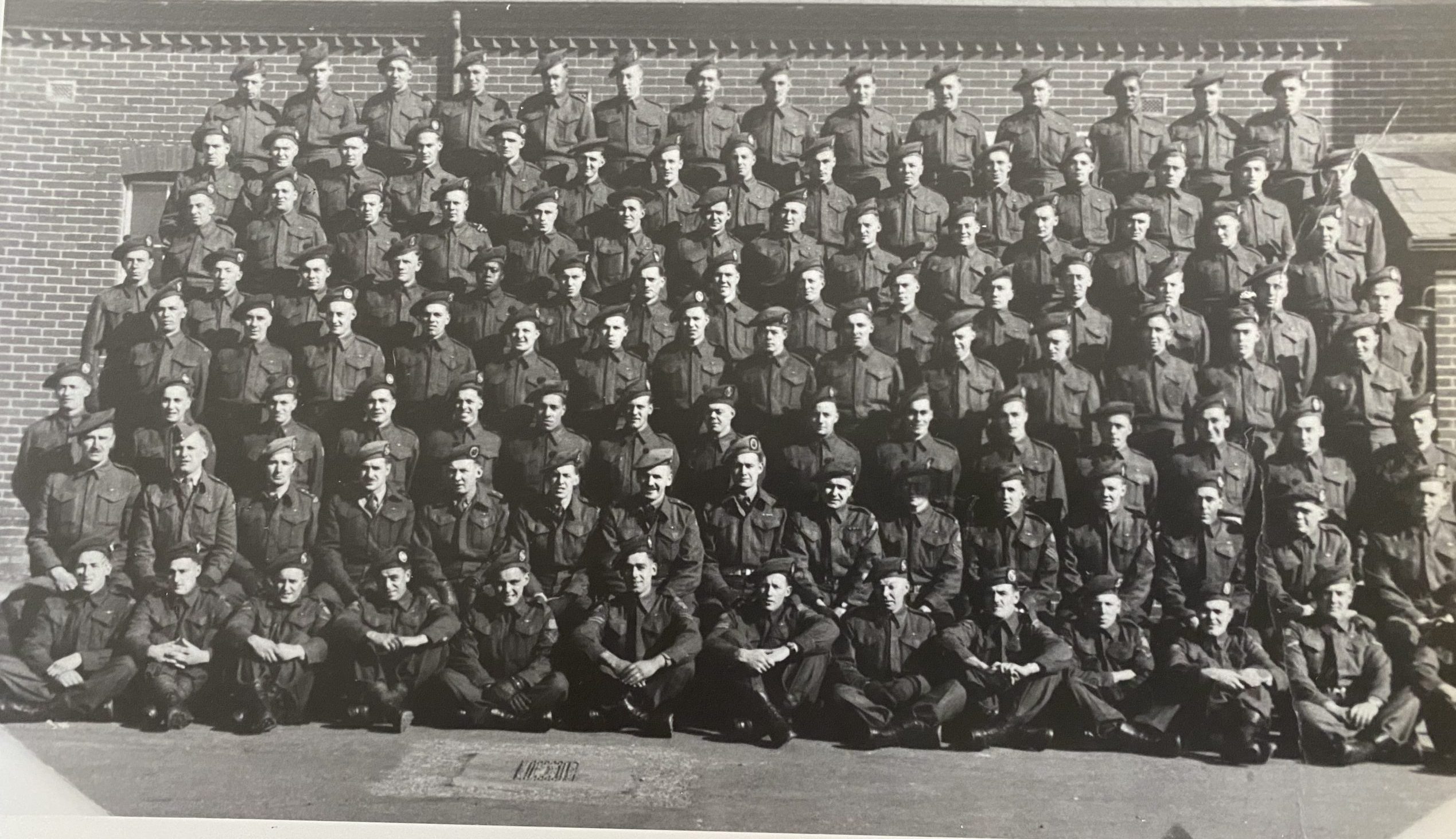
On D-Day, Howard was with “D” Company of the North Nova Scotia Highlanders. The North Nova Scotia Highlanders, an infantry battalion, landed on Juno Beach as part of the 9th Canadian Infantry Brigade, which was the 3rd Canadian Infantry Division’s reserve brigade on D-Day.
The North Novas landed on Juno Beach at “Nan White” at Bernières-sur-Mer at 1140 Hours. Much like the other two infantry battalions of the 9th Infantry Brigade, they became stuck in the town. By 1605 Hours, the battalion began to move toward their assembly area near Beny-sur-Mer.
By 1644 Hours, the North Novas arrived at Bény-sur-Mer. Upon arrival, the battalion took German mortar fire which caused several casualties. They re-organized and moved south toward their next objectives with the tanks of the 27th Armoured Regiment (the Sherbrooke Fusilier Regiment).
The vanguard of the advance first met resistance near Villons-les-Buissons. “A” Company was involved in a short firefight at Colomby-sur-Thaon that slowed their advance. As dark began to set in, it became apparent the battalion would not reach their D-Day objective of Carpiquet that day. They were ordered to dig in for the night and did so around Anisy-les-Buissons. This was done to establish a firm base for further advances. The attack would continue the next day.
The following day, on June 7, 1944, the North Novas, with tank support from the Sherbrooke Fusiliers, reached the villages of Les Buissons, Buron and Authie, almost reaching their D-Day objective. Overrun in Authie and Buron by counterattacks from the 25th SS Panzer Grenadier Regiment, part of the 12th SS Panzer Division (Hitler Youth). The frontline was drawn in the village of Les Buissons. Transformed into a fortress, the 9th Brigade would resist German repeated counterattacks and heavy shelling for a whole month. The Brigade never retreated. The area near Villons-les-Buissons was dubbed “Hell’s Corner” by the Canadians.
According to his family, at some point he was hospitalized (possibly in Portsmouth) for a shrapnel wound to his leg and battle exhaustion, what we know as post-traumatic stress today, an affliction he would struggle with for many years of his life.
Howard was discharged March 19, 1946, having served 1133 days. He was 23 years old.
Married that same year, his marriage certificate states Howard was a fish plant labourer after the war. His family says he loved music, especially playing his guitar and took immense joy in coming together with his children, friends, and family to play together. It could only be made better with some scallops and a cold pint.
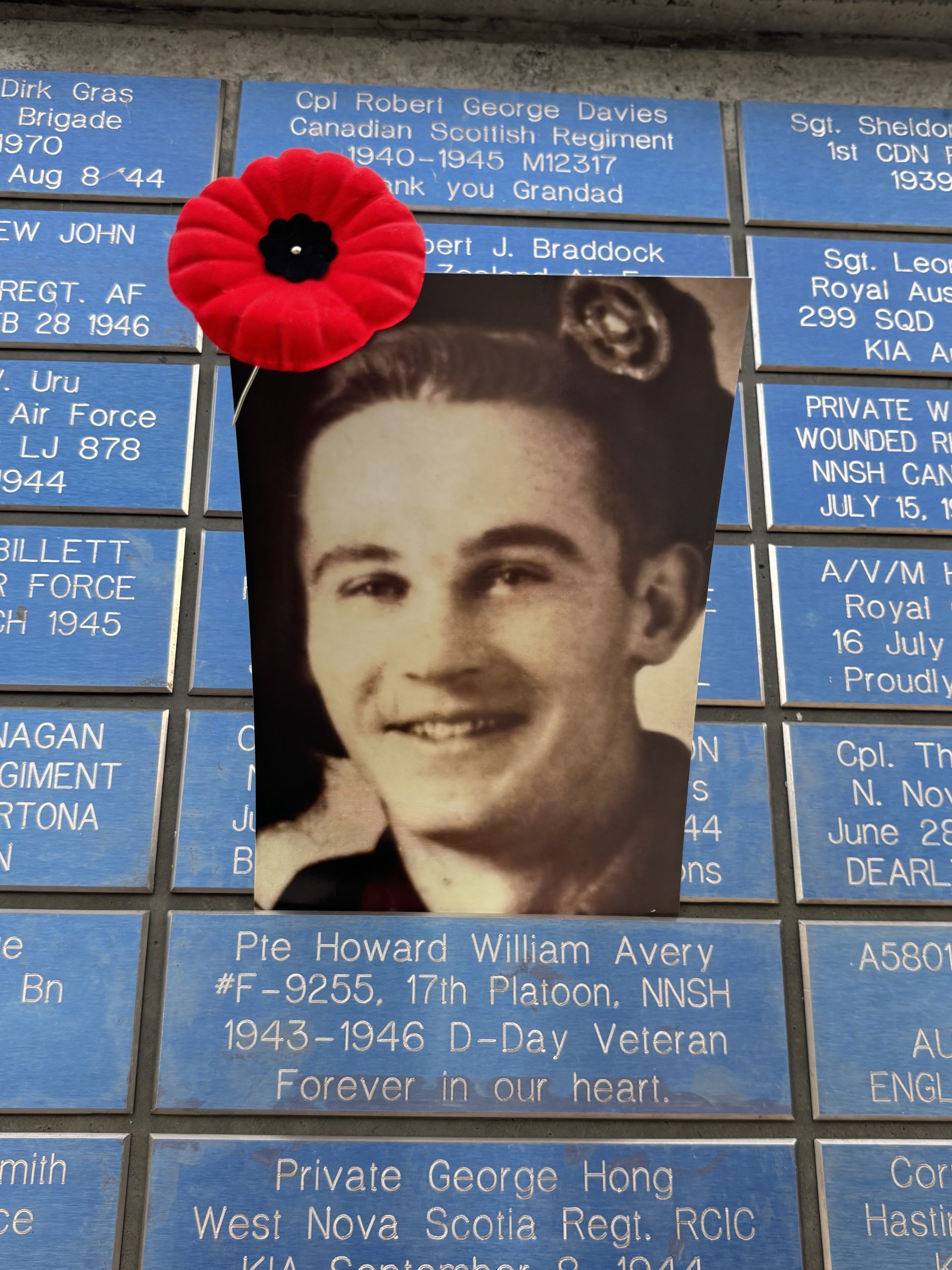
To honour his service, Howard’s granddaughter sponsored a commemorative brick at the Juno Beach Centre.
Over 20 years after his passing, in November 2023, Howard’s son Jim and granddaughter Lisa retraced the steps Howard took—Canada House, Abbaye d’Ardenne, Authie, Villons-les-Buisson, and Juno Beach. They stood where he once stood, and his presence was all around.
You too can commemorate a Veteran and support our work at the Juno Beach Centre through the Commemorative Brick Program.
See more


Donate
to the JBC
As a primarily privately-funded museum, it’s our donors who have made the dream of the Juno Beach Centre a reality.
Learn more about the unique initiatives you can help fund or make a gift to our general fund today to honour the legacy of Canada’s Veterans and ensure their story continues to be told.