
Dispatches
Commemorating Major Daniel Vianey Tremblay (1913-1994)
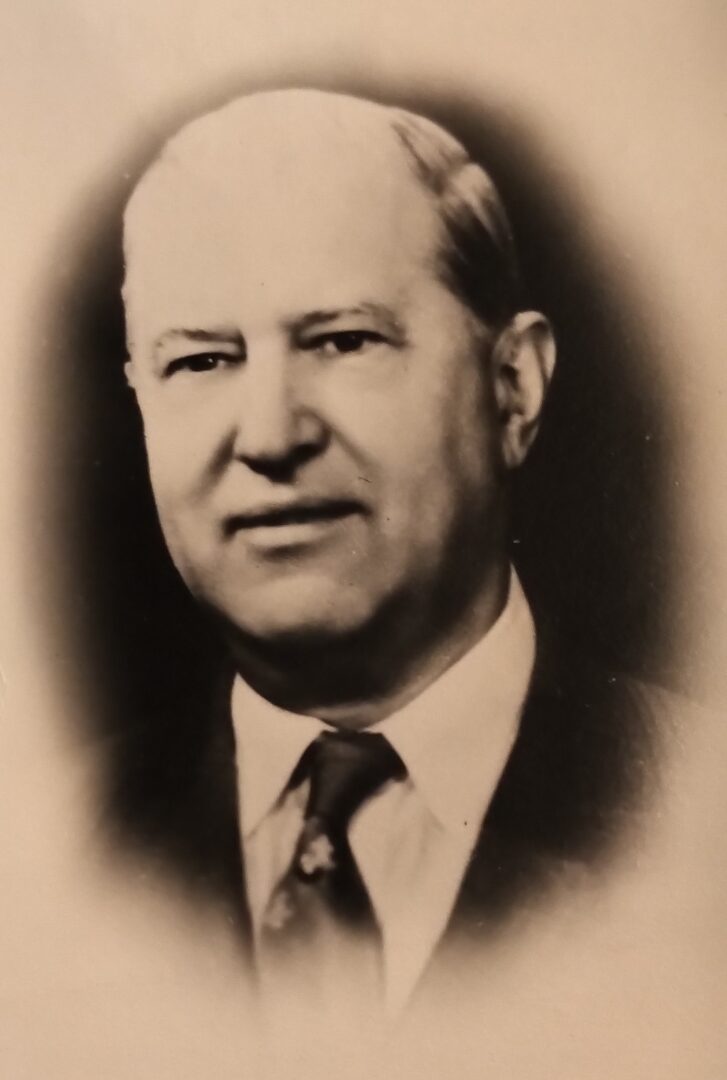
The staff of the Juno Beach Centre Association communicates with many passionate and generous donors throughout the year. Today, we pay tribute to Micheline Tremblay and her father, Normandy veteran Major Daniel V. Tremblay.
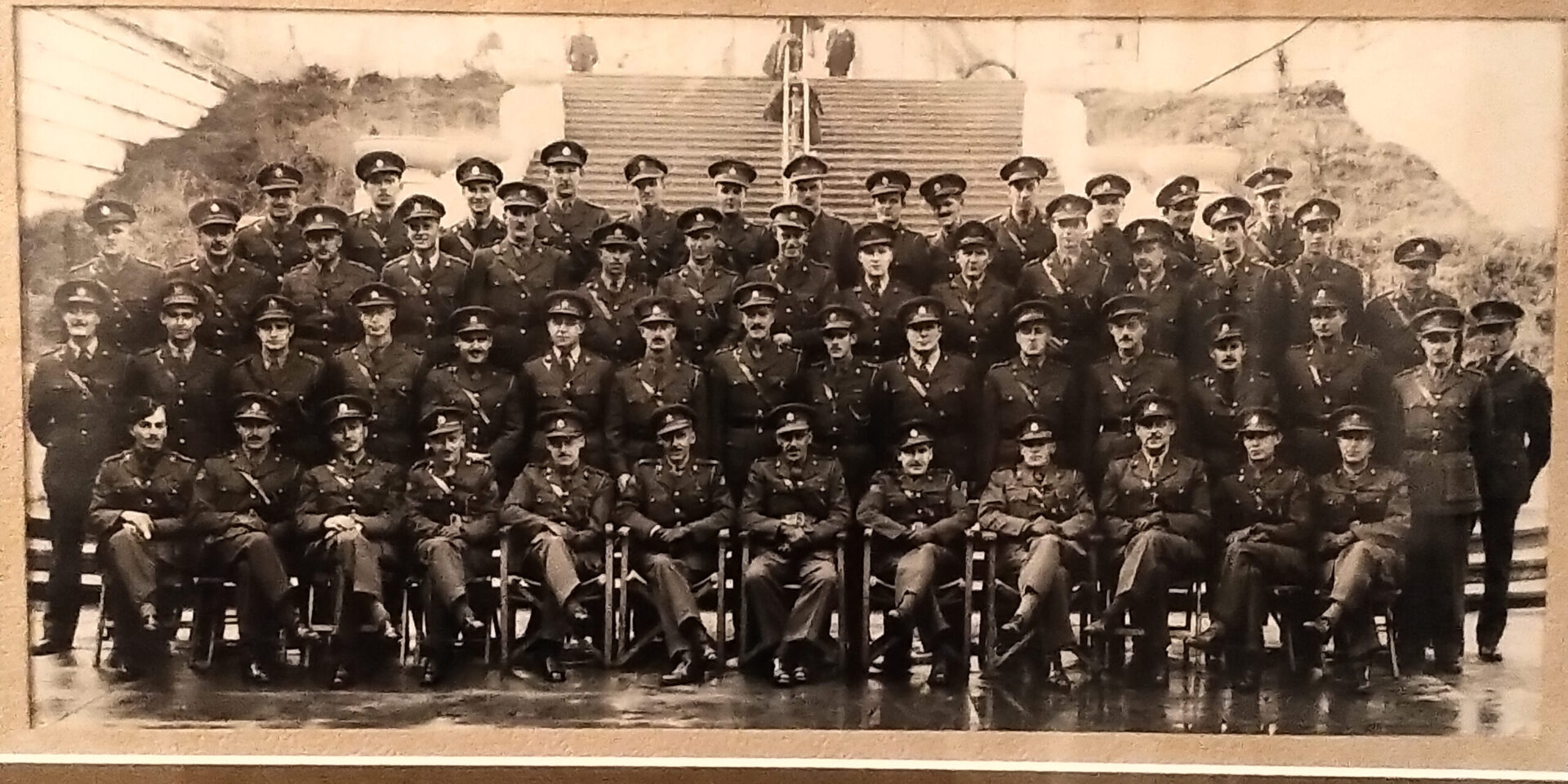
D.V. Tremblay was born into a French-Canadian family hailing from Lachute, Québec, in 1913. His military career began as a member of the Canadian Officers’ Training Corps (C.O.T.C.) at the University of Montreal. Spurred by the enlistment of his friends, Tremblay volunteered for service in the Second World War in 1939. He went on to complete a three-month infantry course in Brockville, Ontario, followed by a one-month officer training course in St. Jean, Québec.
As a commissioned officer, he took part in a one-month “Battle Drill” and Commando Training course near Worthing, England. In November 1942, he joined Le Régiment de Maisonneuve, “The Maisies,” in Sussex, England. The Maisonneuves were attached to the 2nd Canadian Infantry Division along with the Black Watch and the Calgary Highlanders, forming the 5th Canadian Infantry Brigade.
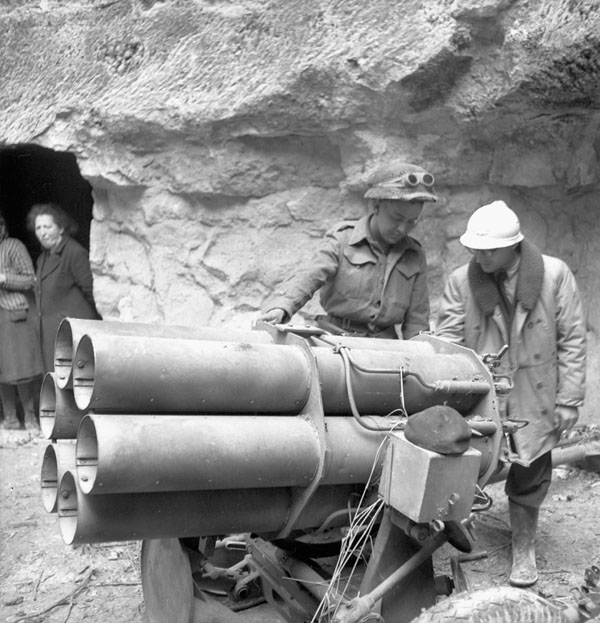
On June 6th, 1944, Tremblay participated in the Allied invasion of German-occupied Western Europe known as Operation Overlord, landing on the Normandy beachhead in France with British infantry. By July, he had rejoined his unit and saw action at the Battle of St. André-sur-Orne where his company weathered intense bombardment from “moaning minnies” (six-inch mortars) while awaiting reinforcements to secure the sector.
In August, Tremblay completed an intelligence course in Caen, France, after which he met British General Bernard Law Montgomery and established contact with the French “Maquis” resistance. Upon returning to his regiment, Tremblay was appointed the Maisonneuves’ intelligence officer. In early September, he discovered that a nearby Canadian platoon was surrounded by German forces. Disobeying orders from his superior to stand-down, Tremblay manufactured a distraction, allowing the trapped Canadians to escape. He notes, to his surprise, that “instead of being Court Martialled” he was appointed “B” Company commander.
Later that month, positioned in Antwerp, Belgium, Tremblay recruited over a dozen well-trained volunteers from members of the Belgian White Brigade, forming the very first Belgian platoon fighting under Canadian direction. In late October, he fought in the Battle of Walcheren Causeway in the Netherlands. Courageously leading “B Coy,” Tremblay navigated several obstacles: adverse weather known as the “October fog and rains,” lack of aircover, broken communications, and intense shelling. Nonetheless, “The Maisies,” though numerically depleted, critically managed to sustain pressure on the area until they were relieved by the 52nd Lowland Division–an achievement Tremblay felt to be the pinnacle of his military career.
In January 1945, Tremblay became an instructor at a “Battle Drill” course while the Canadian Army wintered near Nijmegen, Netherlands. By spring 1945, Tremblay had served nearly nine months of continuous combat and on March 4th, he was severely wounded during the Battle of the Hochwald Forest in Germany. Tremblay, now a major, was transported to Turnout Hospital in the Netherlands and then to Bramshot Hospital in England before sailing from Southampton to Canada aboard the RMS Lady Nelson.
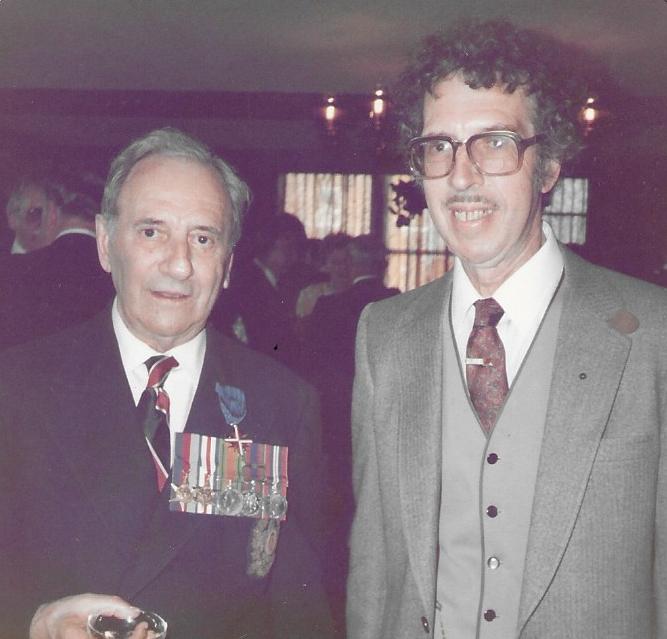
Major Tremblay earned several war-time and post-war honours: 1939-1945 Star, France and Germany Star, Defence Medal, Canadian Volunteer Service Medal with Overseas Bar, War Medal (1939-1945), La Croix du Combattant de L’Europe, and La Médaille Commemorative de la Guerre 1939-1945. The Tremblay family’s service was not limited to Daniel and his brothers. His father, Clement Tremblay, serving as a “dollar-a-year man”–a private business executive hired specially to work for the federal government in Ottawa during wartime–also distinguished himself, receiving the Order of the British Empire (O.B.E.) for selling war bonds.
After the war, Tremblay worked for Veterans Affairs Canada in Montreal, Québec, and married Marguerite Bergeron–a nurse from North Bay, Ontario. Thereafter, the couple moved to Oakville, Ontario, where they met Brigadier-General Denis Whitaker, author of Tug of War and Rhineland. Given his combat experience, Tremblay’s account of the approach to Antwerp, the Battle of the Scheldt, and the push through the Rhineland to the Rhine were all used as valuable research in Whitaker’s books.
Tremblay’s bravery was not limited to the battlefield–at 81 years old he was told he had months to live. According to his family, he confronted this reality by plainly stating, “Well, we all have to die sometime.” D.V. Tremblay passed away in 1994 due to pancreatic cancer. His ashes were interred at two sites: the Tremblay family plot in Lachute, Québec, and at Parc de la Paix located in Lévis, Québec. Tremblay was laid to rest with full military honours during Park de la Paix’s 50th Anniversary service of the Battle of Normandy on June 15th, 1995. Presently, he is commemorated on the war memorial in Lévis and on a brick that bears his name and rank at the Juno Beach Centre in Courseulles-sur-Mer, France.
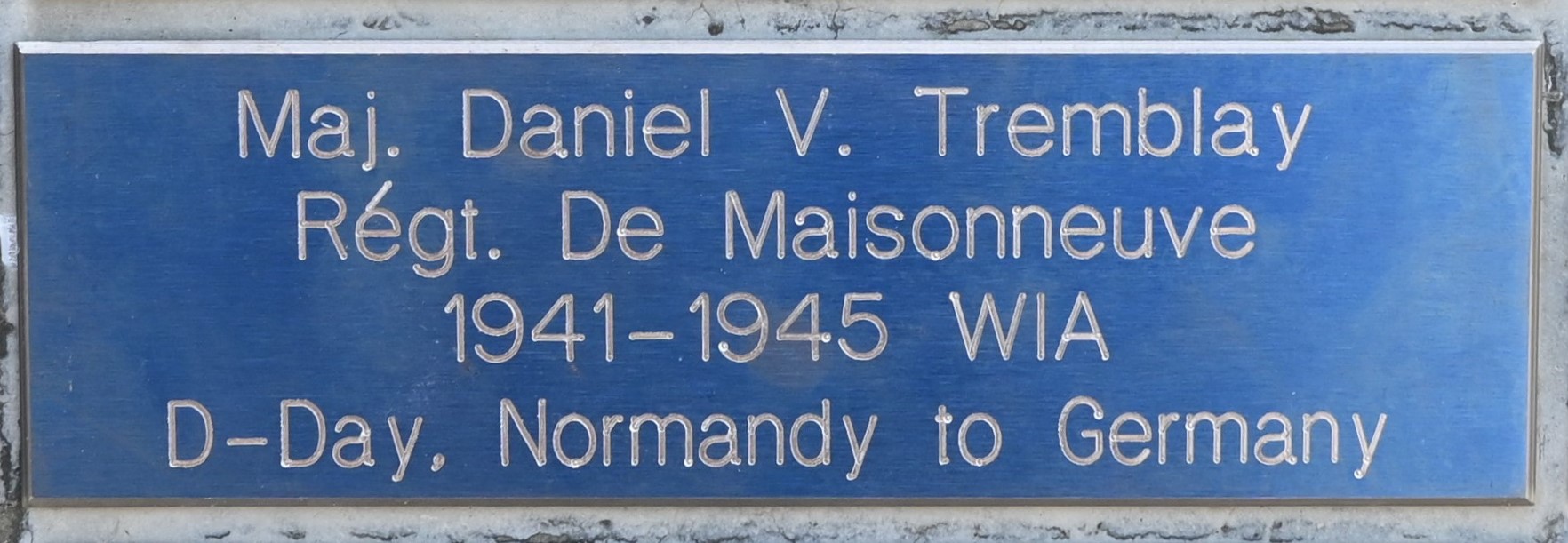
Major Tremblay’s brick is one of thousands at the Juno Beach Centre. This commemorative and fundraising program helps the JBC continue its mission to preserve the legacy of Canadian service and sacrifice in the Second World War. We will never forget those who led from the front, like Major Tremblay, fighting to ensure their children and future generations would inherit a better world.
Remember Today, Remember Always.
See more


Donate
to the JBC
As a primarily privately-funded museum, it’s our donors who have made the dream of the Juno Beach Centre a reality.
Learn more about the unique initiatives you can help fund or make a gift to our general fund today to honour the legacy of Canada’s Veterans and ensure their story continues to be told.