
Dispatches
2024 Summer Institute “humbling” experience for educators
From July 29- August 5, 2024, 23 Canadian educators embarked on a professional development experience of a lifetime with EF Tours and the Juno Beach Centre to discover First and Second World War battlefield and commemorative sites, all in the hopes of becoming stronger teachers.
Since 2005, the Juno Beach Centre has provided over 350 Canadian educators an exciting professional development opportunity to discover the Canadian First and Second World War historic sites in Belgium and France. During the tour, participants visited the Canadian battlefields at Ypres, Vimy Ridge, Dieppe, the D-Day landing beaches, and the Falaise Gap, as well as additional stops at memorials, museums, cemeteries across Belgium and France.
With participants coming from across the country, from Nova Scotia’s South Shore to British Columbia’s interior, the eight-day tour was also a chance for the engaged and eager teachers to share best practices from their own classrooms.
The notion of memory in the First World War
After flying into Brussels, the first two days of the tour were spent visiting iconic Canadian First World War sites. A visit to Flanders isn’t complete without a stop at Essex Farm, the spot where John McCrae wrote the poem “In Flanders Fields”. The teachers were asked to reflect on whether the infamous poem is still relevant today and how they use it as a tool in their classrooms.
The evening of the first day in Europe was spent at the Menin Gate Last Post Ceremony. Kyle Olsen, a teacher from Langley, BC reflected on the experience. “When we discuss these topics with students, it’s difficult to understand the powerful feelings of fear and uncertainty these soldiers felt throughout these major events. When we attended the Last Post Ceremony in Ypres, that feeling came to me…”
The group then moved from Belgium into northern France. For many, visiting the Canadian National Vimy Memorial was ticking off a bucket-list item. The group got a tour of the tunnels and trenches on site from a Canadian student guide.
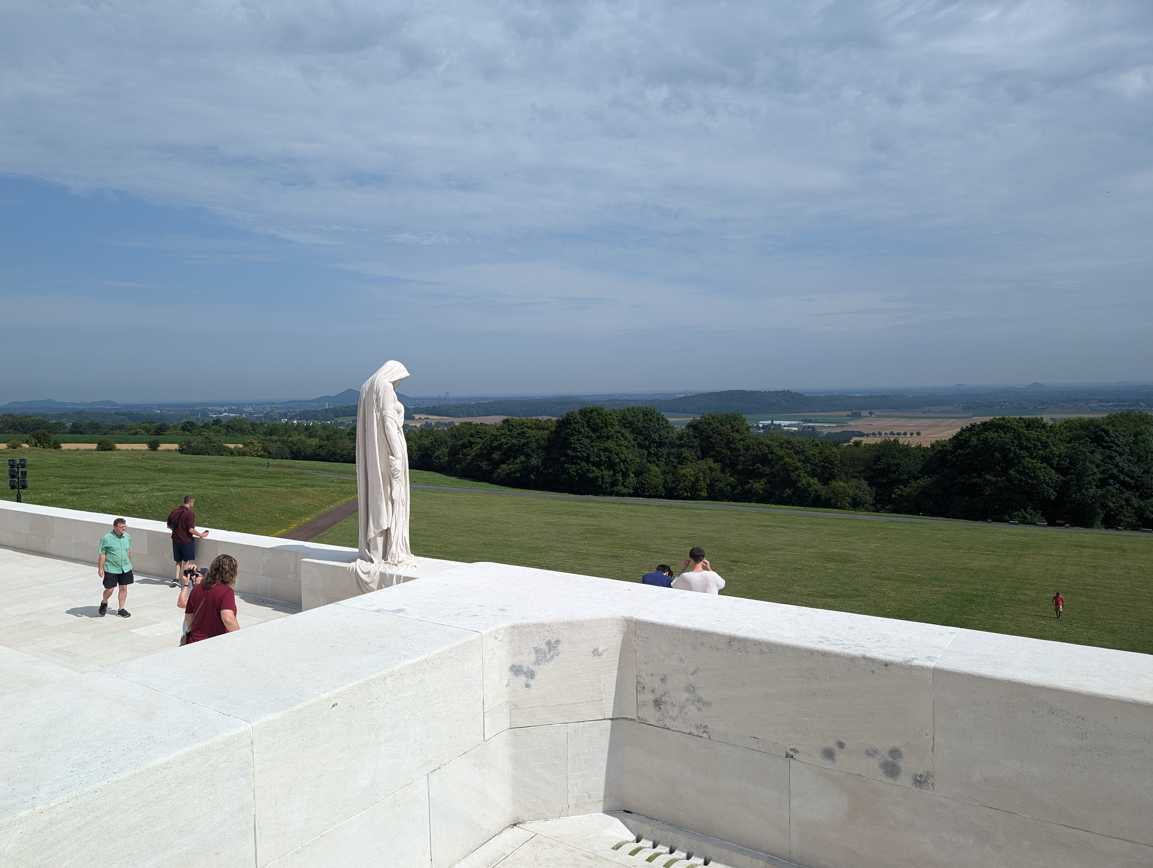
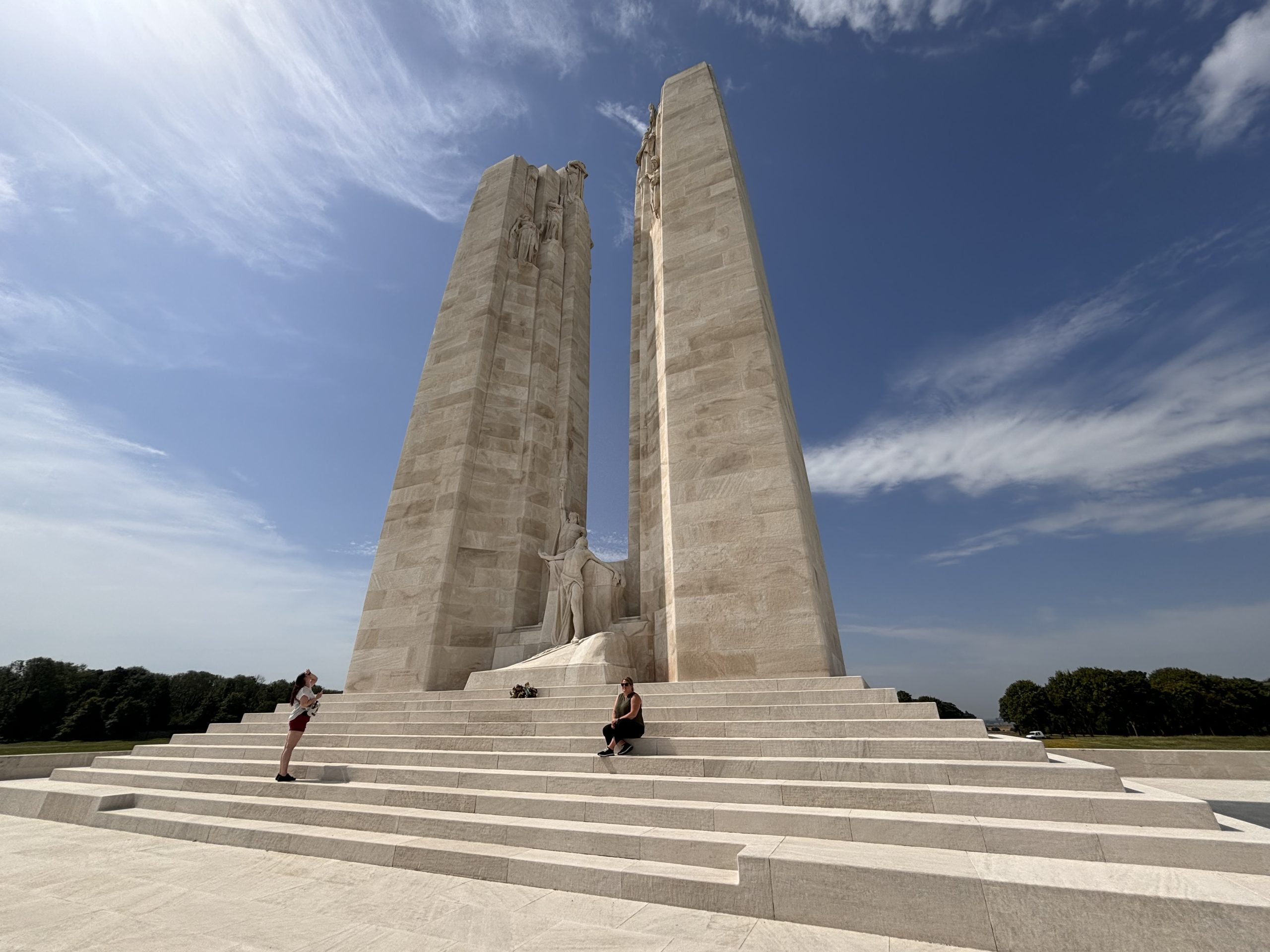
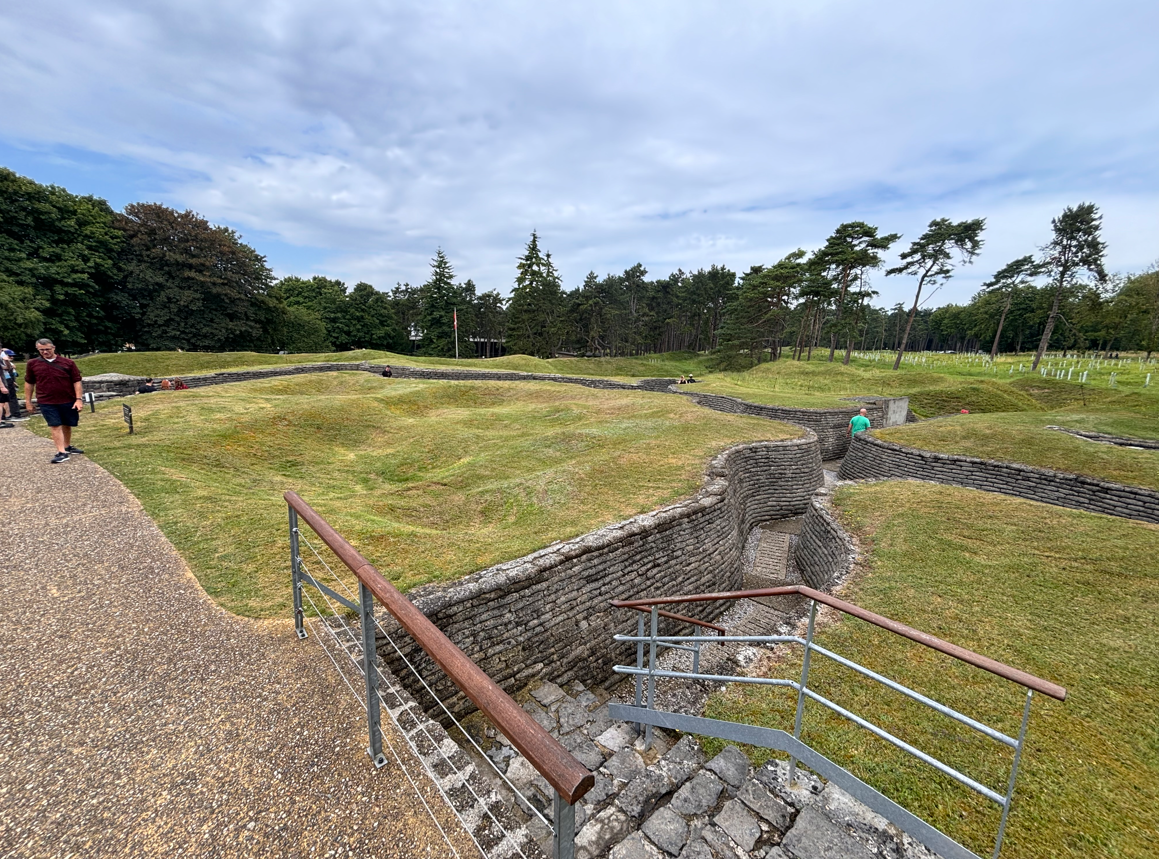
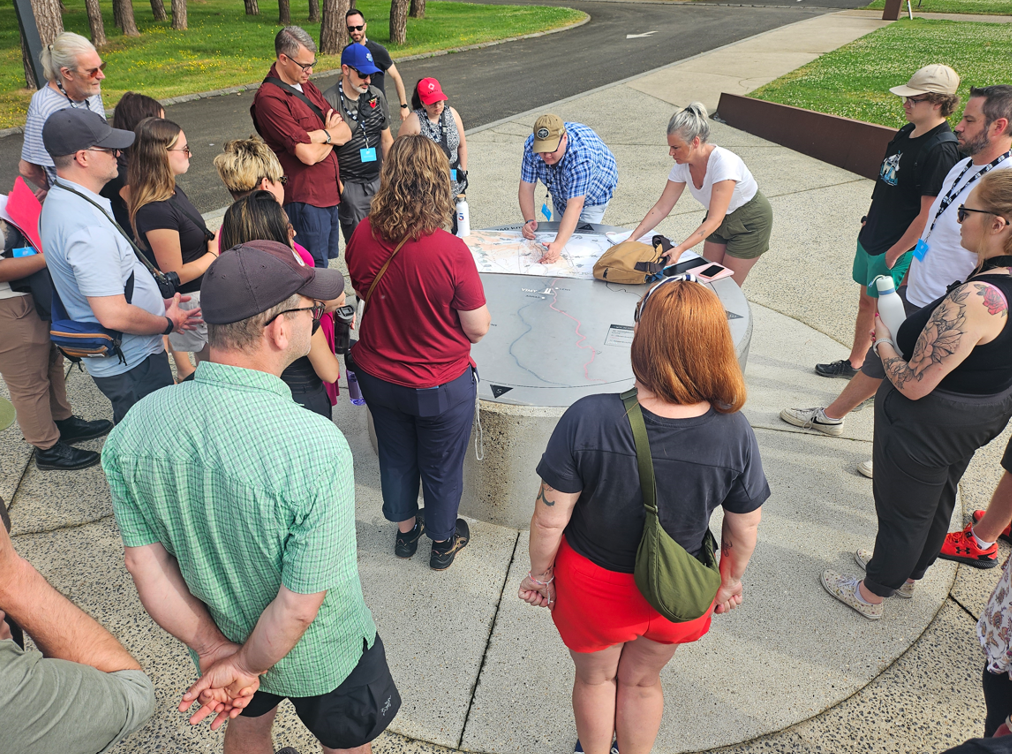
In the first three days of our tour, I’ve come to realize (much more than before), that experiencing learning situations about the events that took place at Vimy Ridge and the Artois region are MUCH MORE tangible when you are there.
– Sean O’Neill, Montreal
From Vimy to Juno (via Dieppe)
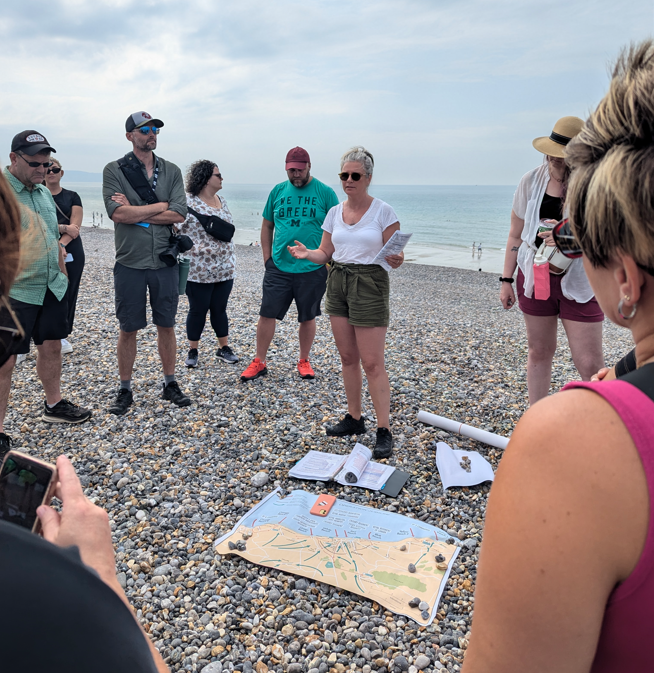
The next day was spent learning about the Dieppe Raid. Each day, Marie-Eve Vaillancourt, Director of Exhibitions for the Juno Beach Centre Association, provided historical briefings that helped put each stop into context. The raid is a source of controversy and many competing histories, and Marie-Eve helped the educators sort through these ideas. During this portion of the tour, teachers were asked how they teach failure and controversy in their lessons.
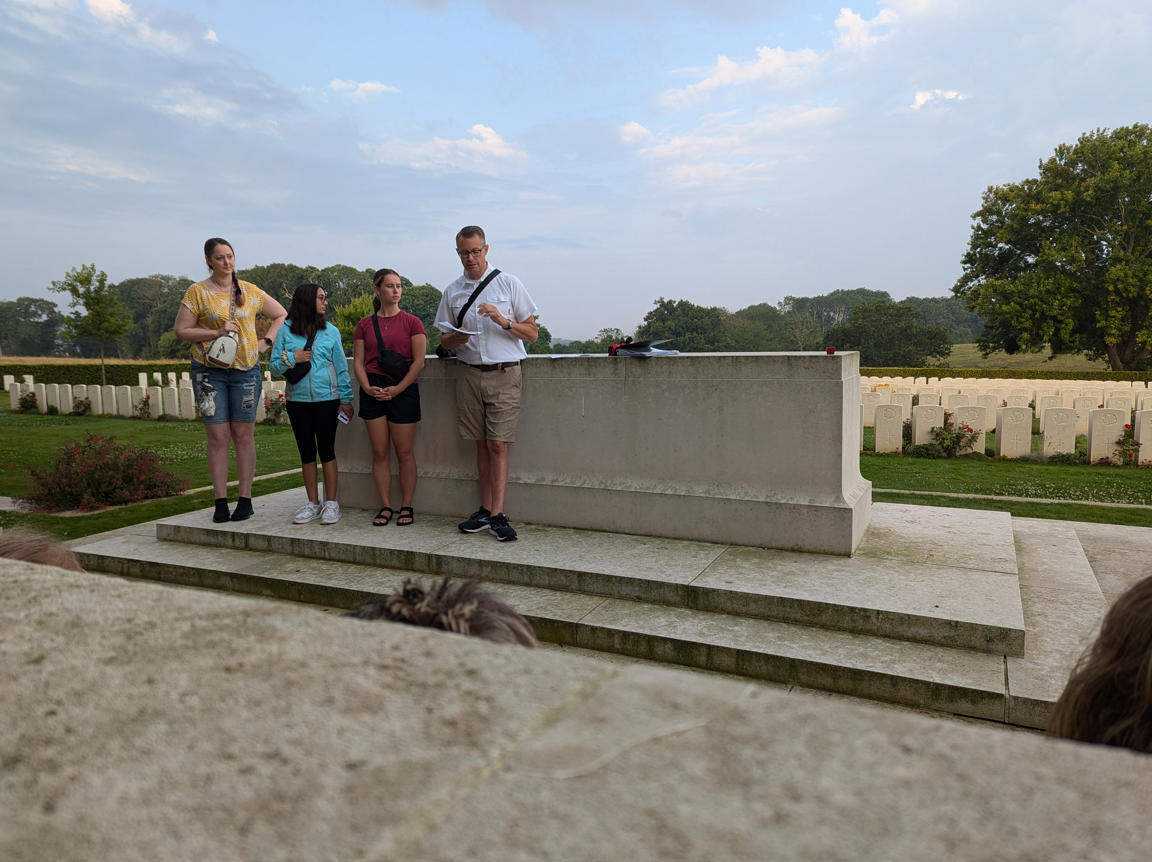
Equally, in small groups, each participant had to present on a given topic. On the following day, at the Dieppe Canadian War Cemetery, four participants spoke to “Grey zones in history: What lessons were learned at Dieppe? To what extent do the lessons learned from soldiers allow us to develop a deeper understanding of Dieppe as a whole?” Each presentation was a chance for teachers to delve deeper into a topic that interests them and to share with the wider group.
Visiting Juno Beach
The rest of the tour was spent learning about Operation Overlord, Canadian participation in the Normandy landings, and the road to victory. Similar to the guide program at Vimy Ridge, the Juno Beach Centre hosts a student guide program. Vivian, from Ontario, provided a tour of German bunkers and Juno Park, finishing by leading the group down to the beach. The group visited other surrounding sites and followed in the footsteps of the Canadian units that made their way past the beach, as they fought to liberate Caen.
Other highlights from Normandy:
- Lunch at Canada House
- Bény-sur-Mer Canadian War Cemetery
- La Cambe German Cemetery
- Lunch with the French Juno Beach Centre founders in Le Mesnil-Patry
- The D-Day museum in Arromanches
- The Abbaye d’Ardenne
- The Falaise Civilians in Wartime Memorial
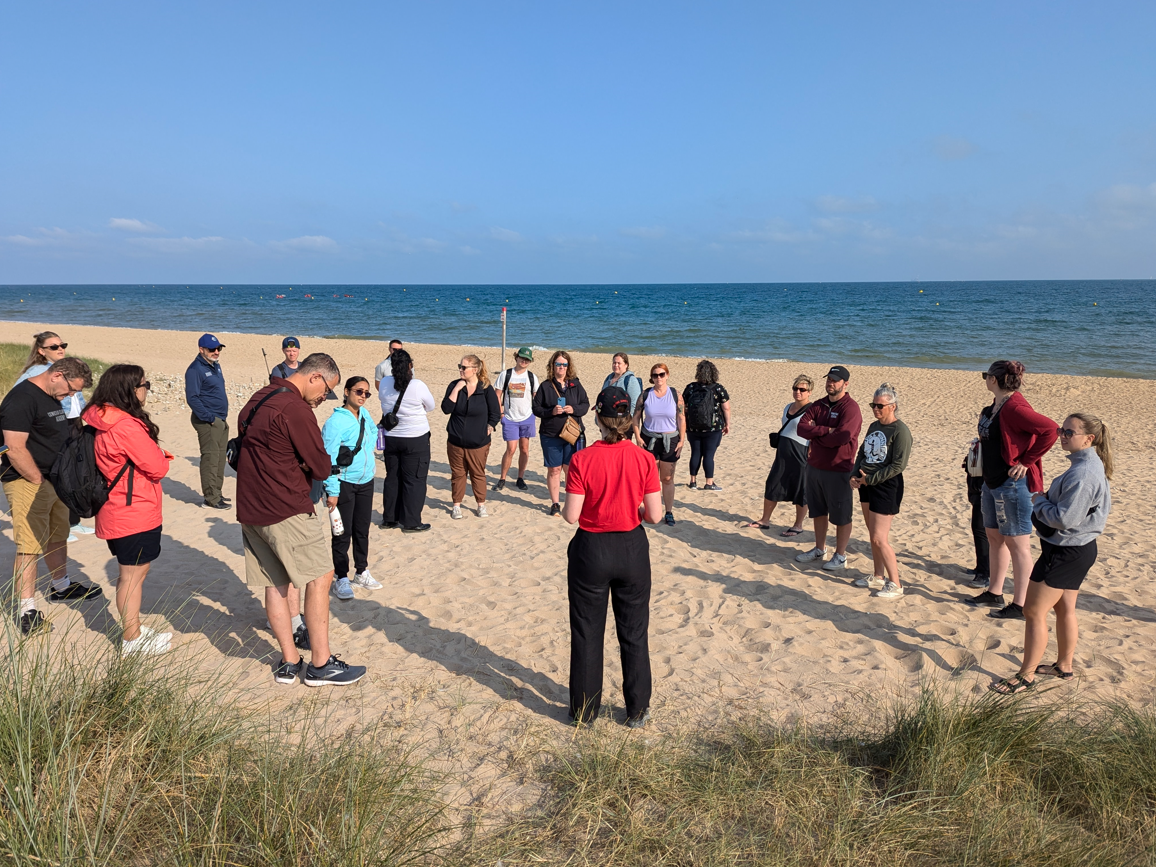
The most surprising thing of all walking the beaches of Normandy is the flags. More Canada flags are hung than exist in most cities in Canada. The love and gratefulness is [sic] insurmountable, the people here are not just thankful, they have committed their lives and their futures to showing the love they have for Canadians.
– Kristy Williams, Alberta
Bretteville-sur-Laize Cemetery Ceremony
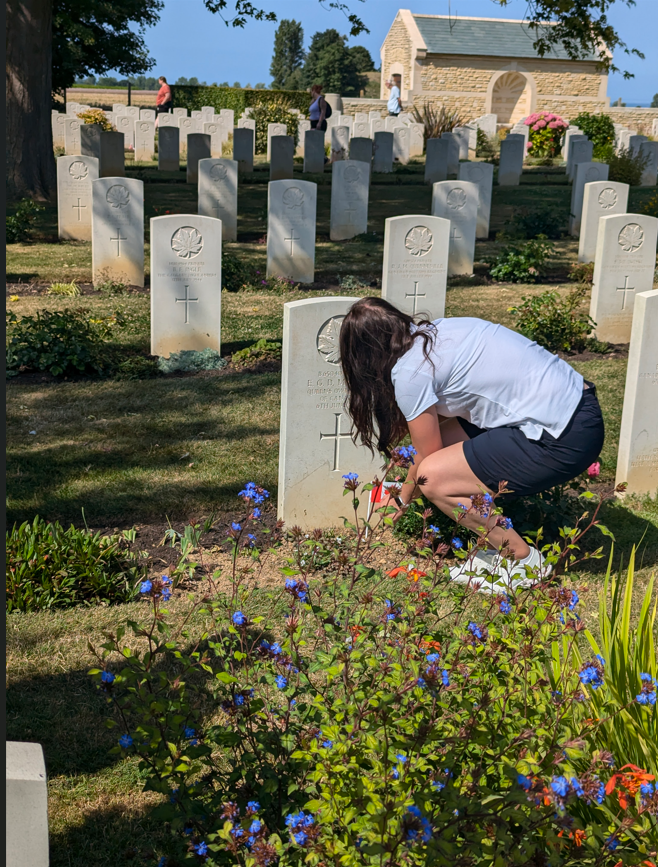
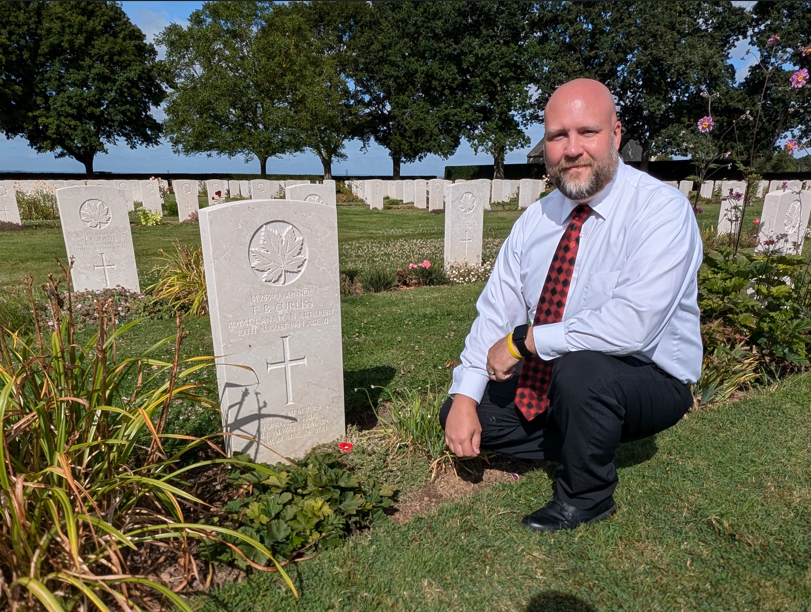
A touching moment for Summer Institute participant Travis Curliss, was the chance to visit his great-uncle at the Bretteville-sur-Laize cemetery. No one from his family has previously had the chance of visiting this ancestor’s grave, and Travis was honoured to be the first.
To add to the touching moment, the group visited the cemetery on the day of a local ceremony that is held each year by all the surrounding village mayors, to pay homage to the Canadians who liberated their homes. On the 80th anniversary year of the Battle of Normandy, Travis got to share the story of Franklin Blaine Curliss, who died August 10, 1944. Listen to Travis share the experience with CBC.
The 15th Summer Institute and Battlefields Tour was hosted with the support of EF Tours.
See more


Donate
to the JBC
As a primarily privately-funded museum, it’s our donors who have made the dream of the Juno Beach Centre a reality.
Learn more about the unique initiatives you can help fund or make a gift to our general fund today to honour the legacy of Canada’s Veterans and ensure their story continues to be told.







