In the hours after the Dieppe Raid, the British and German forces both recognized how the tragedy could be spun into propaganda. Both sides published images, film, and testimonies about the raid with the goal of influencing public perception to galvanize support for the war effort. Propaganda became inseparable from fact.

Allied Propaganda
The Allies tried to minimize the defeat at Dieppe. Military propagandists initially insisted on portraying the raid as successful. Instead of focusing on the loss of life, the media highlighted the bravery of the men involved. In fact, even before the raid began, the British Combined Operations Headquarters had already crafted a public relations plan. They decided that if the raid failed, the British and Canadian militaries would emphasize how lessons learned from the assault could be applied to the future. While this was part of the public relations plan, there is no evidence that “learning lessons” was actually one of the raid’s primary goals.


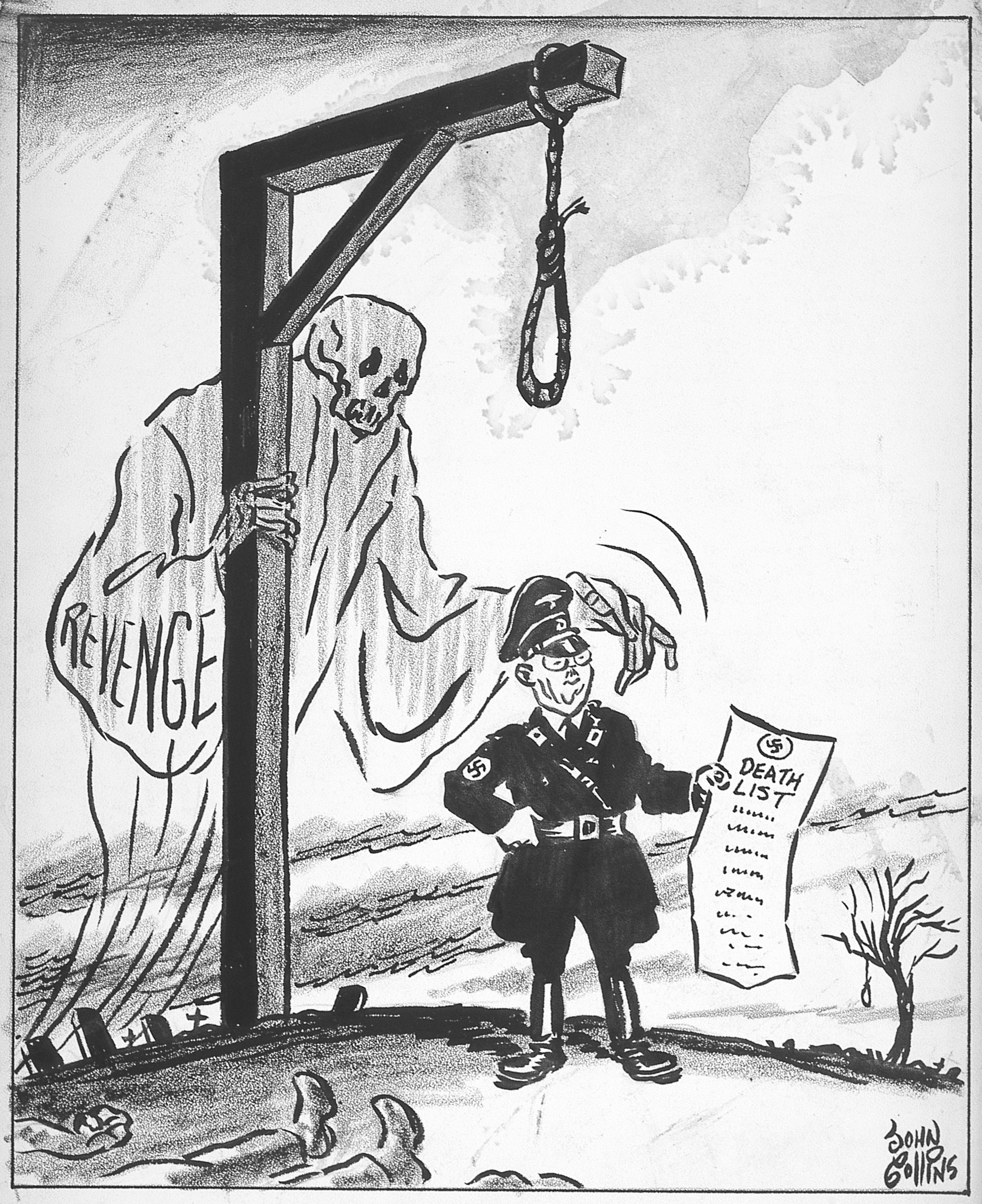
Cartoons published in Canadian newspapers in response to the Dieppe Raid. (First image: Bibliothèques et Archives du Québec; Second and third images: McCord Museum)
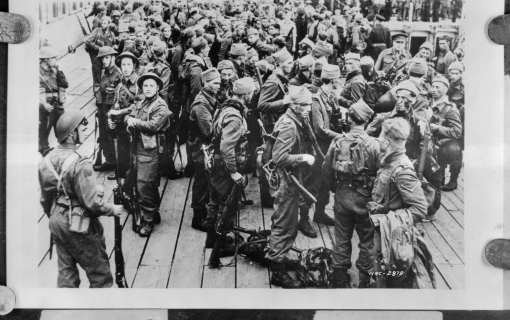
This piece of Allied propaganda presents the Dieppe Raid as a success. It features footage of soldiers triumphantly returning to England and uses the public relations “lessons learned” argument.
Axis Propaganda
Propaganda was an important part of Nazi Germany’s strategy. So much so that photographers were sent to take photos of the Allied defeat at Dieppe. Some even went as far as staging the bodies of deceased Canadians and removing those of German soldiers to capture a more compelling photo for their war effort.

These images supported the narrative that the British had launched the desperate attack to open a Second Front and draw the German Army away from the Soviet Union. This portrayal of the Dieppe Raid showed Germans that they could continue their invasion into the Soviet Union with little concern about pressure in the west.

DIE DEUTSCHE WOCHENSCHAU
Die Deutsche Wochenschau were a series of Nazi propaganda films destined to German civilian populations broadcasted between 1940 to 1945. This episode focuses on the failure of the Dieppe Raid.


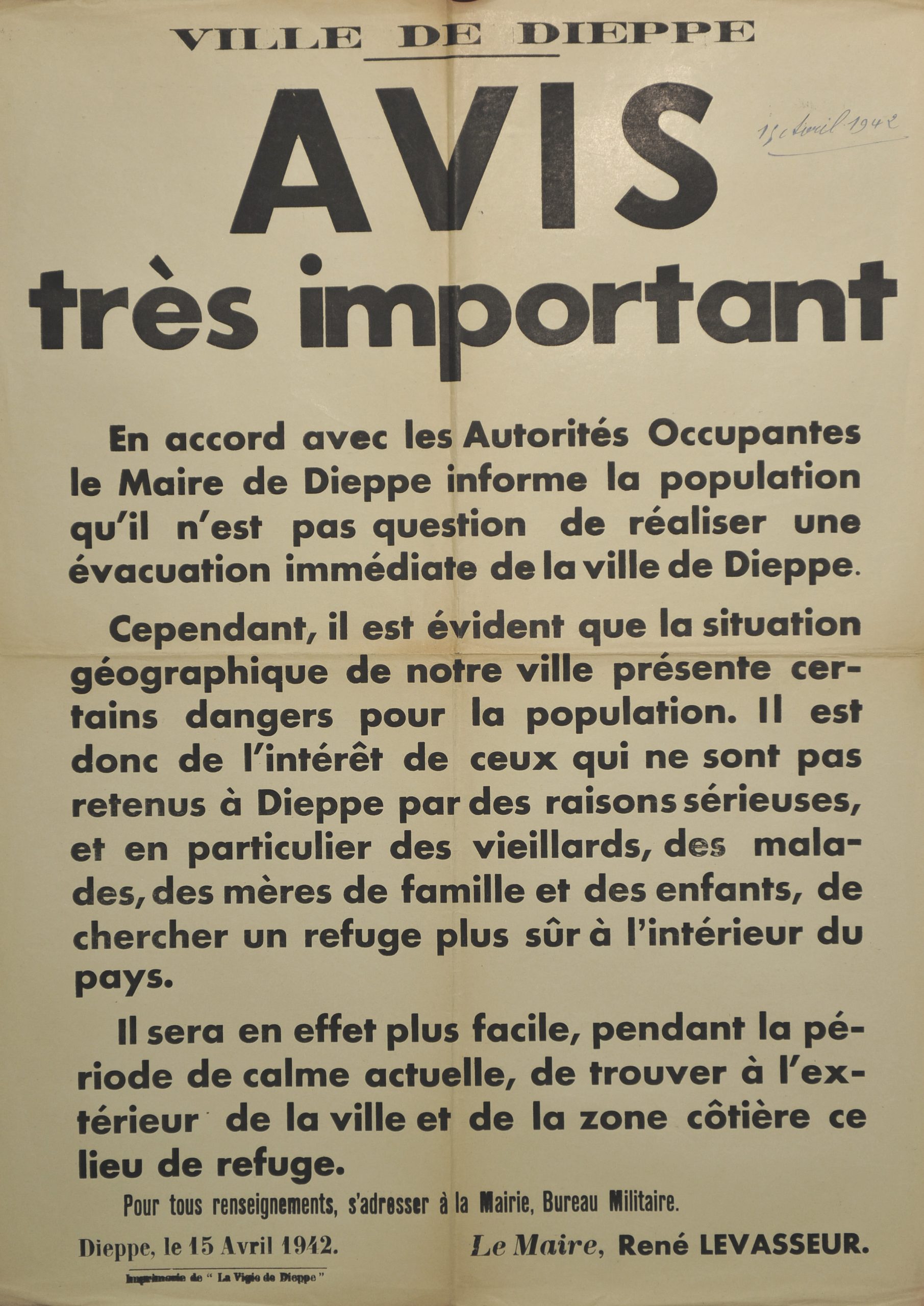
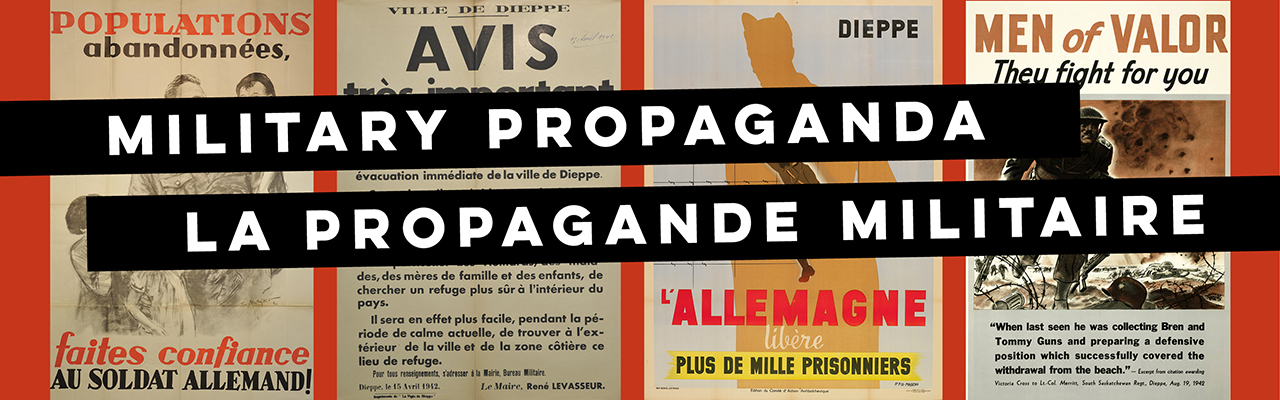
Propaganda poster celebrating the return of the French POWs, presenting the German occupant as generous and fair. (Archives de la ville de Dieppe)
Propaganda and Occupied Dieppe
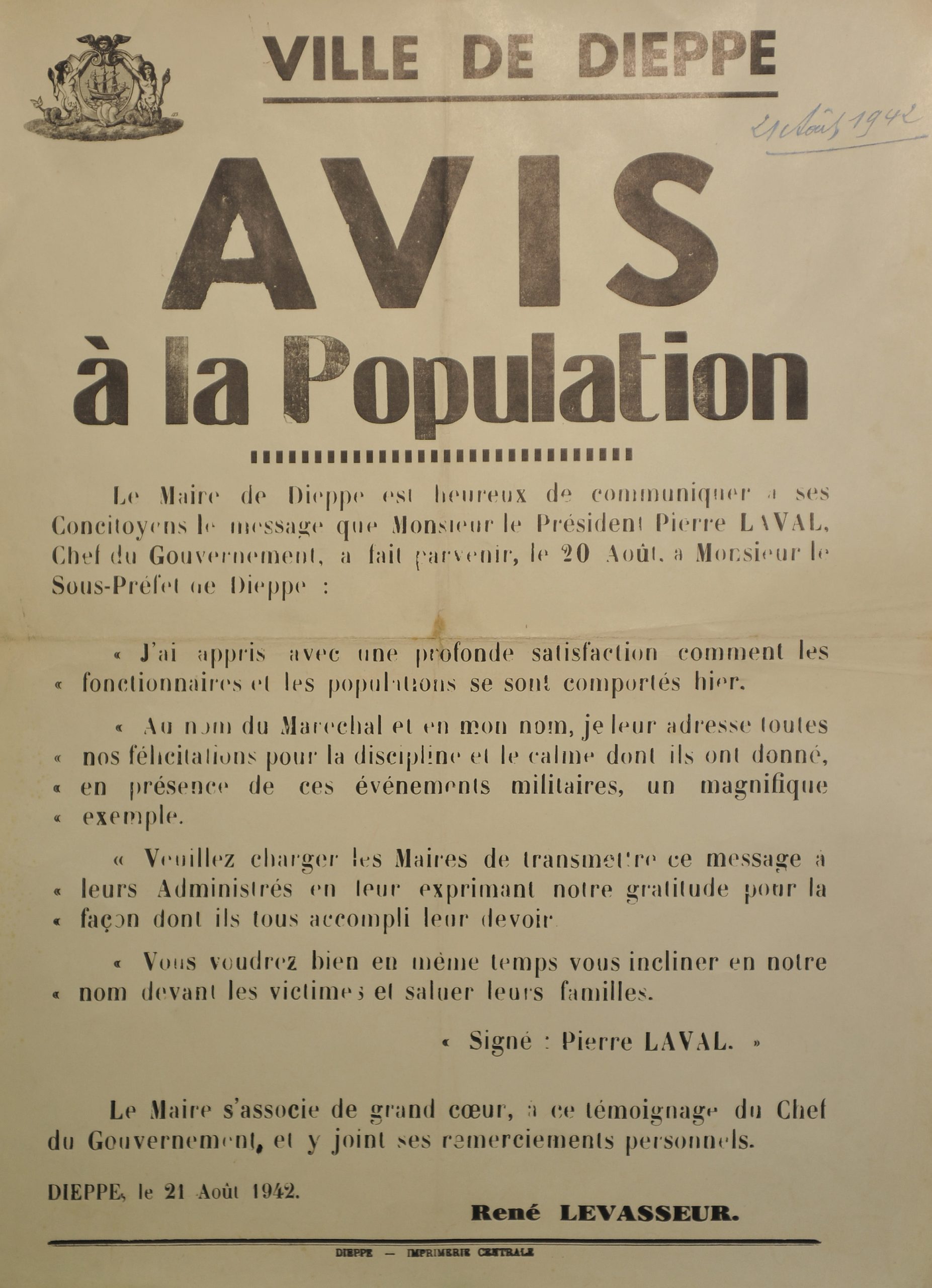
If caught, any French civilian who showed support for the Allied cause would be imprisoned or executed by the occupying German forces. In an attempt to suppress support for the Allies, Hitler’s regime subjected civilians to regular propaganda. After the Dieppe Raid failed, propaganda leaflets were distributed to civilians in Dieppe, praising them for remaining “passive” and “calm” during the assault.